Hainan Customs Closure: Impact on Hong Kong/Singapore Financial Sectors and Investment Implications
解锁更多功能
登录后即可使用AI智能分析、深度投研报告等高级功能
关于我们:Ginlix AI 是由真实数据驱动的 AI 投资助手,将先进的人工智能与专业金融数据库相结合,提供可验证的、基于事实的答案。请使用下方的聊天框提出任何金融问题。
相关个股
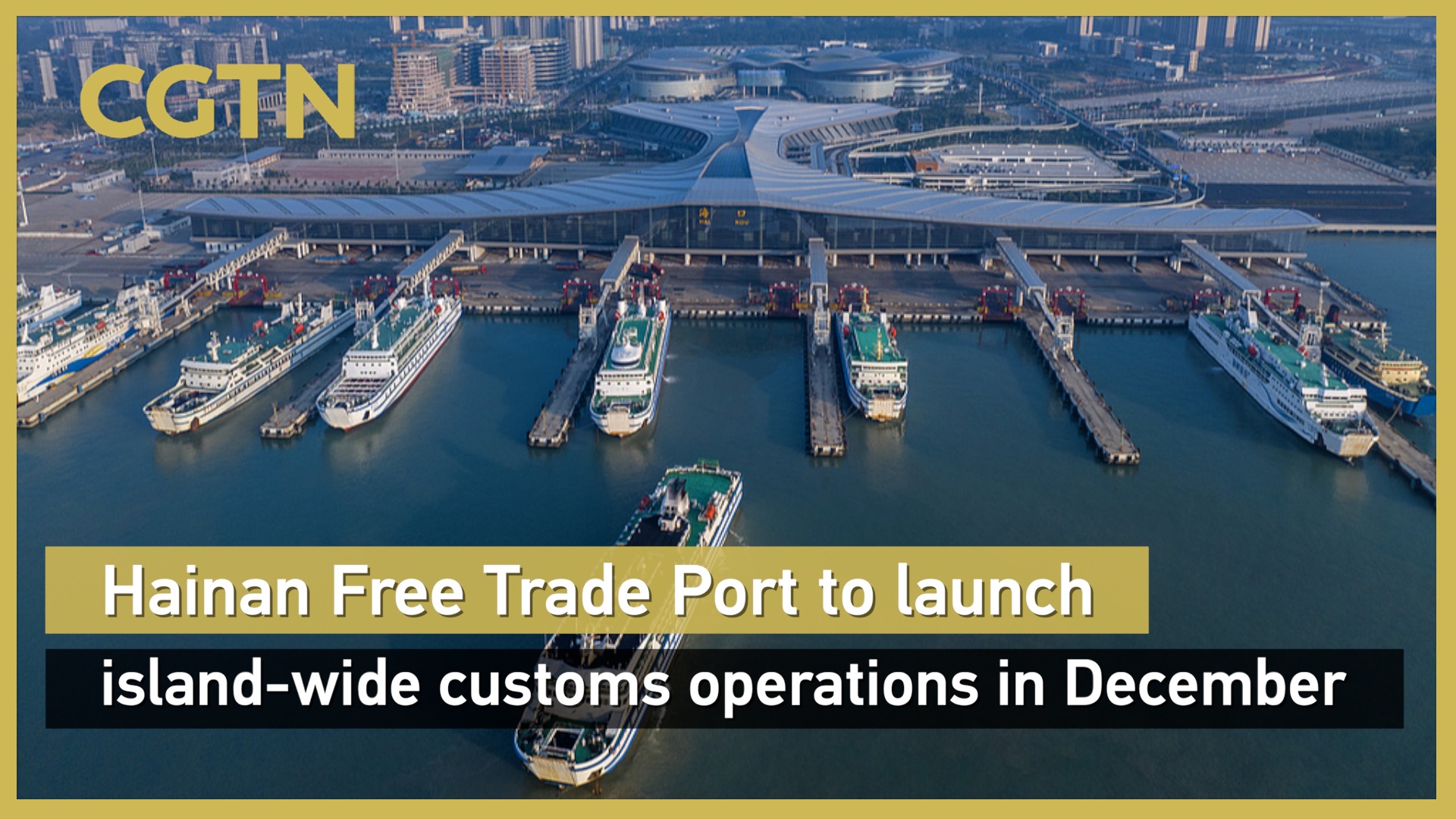
Hainan’s customs closure policy, launched on December 19, 2025, is a core step in Hainan Free Trade Port (HFTP) construction, with financial liberalization measures such as the Multi-Functional Free Trade Account (EF account) system at its center [1]. The EF account follows a “first-line open (Hainan-overseas) and second-line managed (Hainan-mainland China)” principle, enabling free fund transfers between EF and overseas accounts (excluding securities investment) with no limits on foreign debt or cross-border financing [1]. As of October 2025, 11 banks in Hainan had deployed EF accounts, handling 2.689 trillion yuan in business with 80 countries/regions [1]. Complementing this, HFTP offers a 15% corporate income tax (vs. 25% on the mainland) and a 15% capped personal income tax for high-end talent [2].
Hong Kong and Singapore, as leading Asian financial centers, have distinct strengths: Hong Kong ranked 3rd globally in the 2025 Global Financial Centres Index with strong RMB business links to mainland China [3], while Singapore excels in wealth management and recently became the 4th largest ship registry [4]. The initial impact of Hainan’s policy on both is limited due to their mature infrastructure, deep talent pools, and long-standing international recognition [1][2]. However, over the long term, Hainan could compete in serving mainland-ASEAN market segments if it successfully builds comprehensive financial infrastructure [2].
- Short-Term vs. Long-Term Dynamics: Hainan’s financial sector is in early stages (EF account system operational for ~1.5 years), limiting immediate competitive pressure on Hong Kong/Singapore. Long-term impact depends on sustained policy implementation and ecosystem development [1].
- Market Segmentation: Hainan may focus on serving mainland Chinese enterprises expanding into ASEAN, while Hong Kong/Singapore retain global client bases and institutional depth.
- Investor Sentiment: Cautiously optimistic, with analysts linking Hainan’s policy to potential growth in duty-free shopping and financial services, contingent on supporting policy execution [5].
- Risks: Uncertain long-term policy consistency in Hainan; limited current financial infrastructure and talent pool; potential volatility in Hainan-related asset pricing.
- Opportunities: Early-stage investment opportunities in Hainan’s developing financial services and duty-free sectors; stable investment prospects in Hong Kong/Singapore’s mature markets amid short-term limited impact.
- Time Sensitivity: Short-term (1-2 years) impact is negligible, while long-term (5+ years) depends on Hainan’s policy execution.
The analysis indicates Hainan’s customs closure policy introduces incremental financial liberalization, but its impact on Hong Kong and Singapore’s financial services sectors is currently constrained by the latter’s established advantages. Investors should monitor Hainan’s progress in infrastructure development, talent attraction, and policy implementation, while maintaining awareness of the short-term stability of Hong Kong/Singapore markets. No prescriptive investment advice is provided; this analysis aims to offer objective market context for decision-making.
数据基于历史,不代表未来趋势;仅供投资者参考,不构成投资建议
关于我们:Ginlix AI 是由真实数据驱动的 AI 投资助手,将先进的人工智能与专业金融数据库相结合,提供可验证的、基于事实的答案。请使用下方的聊天框提出任何金融问题。