2026 Space/Aerospace Sector Drivers: Rocket Lab (RKLB) Positioning vs. Data Analytics and Battery Tech
解锁更多功能
登录后即可使用AI智能分析、深度投研报告等高级功能
关于我们:Ginlix AI 是由真实数据驱动的 AI 投资助手,将先进的人工智能与专业金融数据库相结合,提供可验证的、基于事实的答案。请使用下方的聊天框提出任何金融问题。
相关个股
This analysis is based on market data, sector reports, and company updates [0], as well as a social media post documenting a trading rotation from Palantir (PLTR) to QuantumScape (QS) to Rocket Lab (RKLB), with bullish sentiment on space stocks for 2026 [0].
The global space economy is projected to reach $1.8 trillion by 2035, with 2026 drivers including:
- U.S. government defense spendingon missile defense satellite constellations and hypersonic test capabilities [2][3].
- Reusable rocket technology(e.g., Rocket Lab’s Neutron) enabling cost-effective satellite constellation deployment [4][5].
- Demand for low-Earth orbit (LEO) satellitesfor connectivity, Earth observation, and national security [1][4].
Rocket Lab’s growth is catalyzed by two critical milestones:
- A $816M prime contract (its largest ever) with the U.S. Space Development Agency (awarded Dec 19, 2025) to build 18 missile defense satellites [3][5].
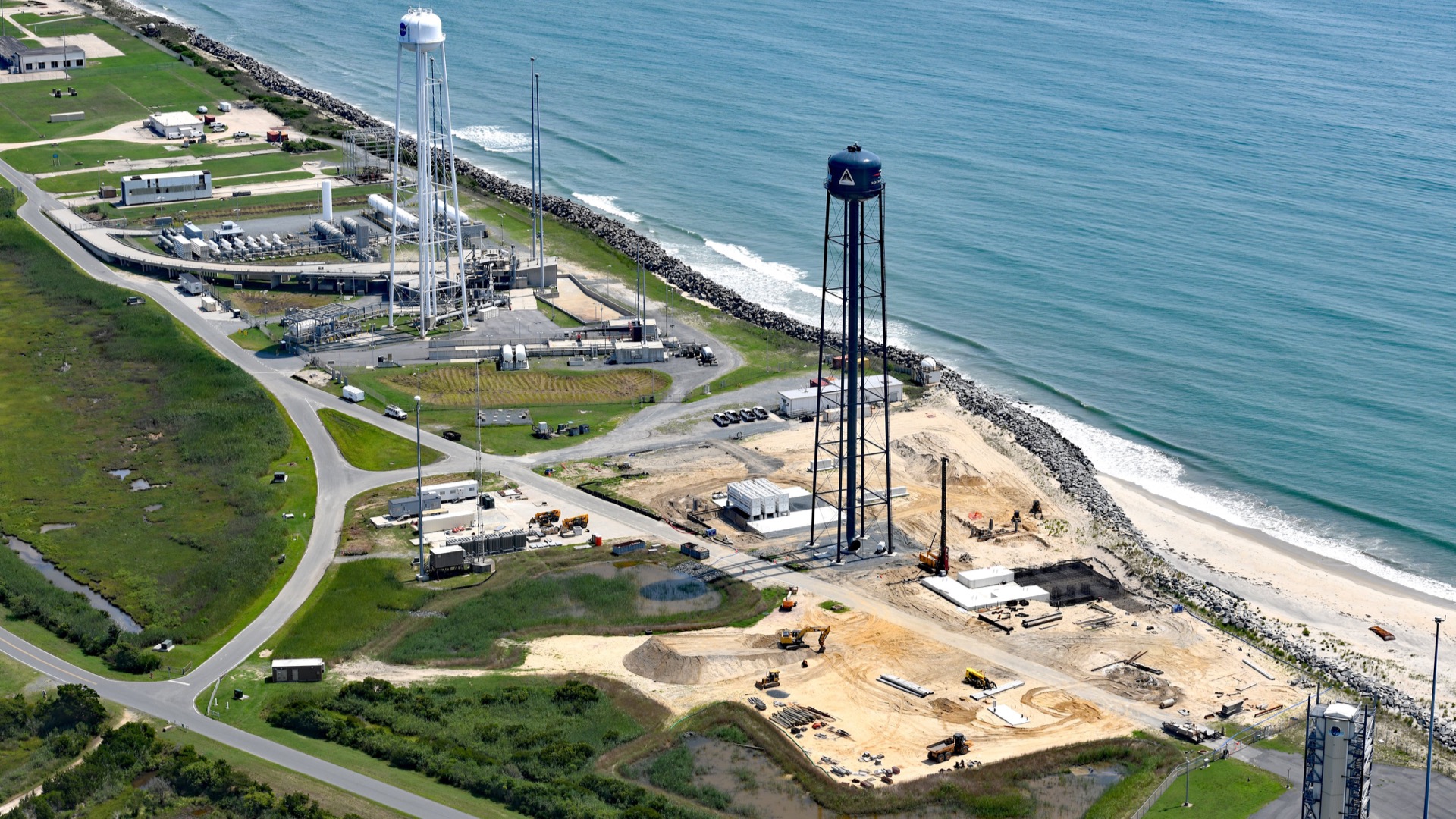
- The upcoming early-2026 launch of the Neutron reusable medium-lift rocket, which cleared a key fairing qualification milestone in December 2025 [4][5].
These factors contributed to RKLB’s 53.04% 21-day return (Nov 20–Dec 19, 2025) and $39.59B market cap [0].
In comparison, the data analytics sector (represented by PLTR) is projected to reach $132.9 billion by 2026 with a 30.08% CAGR, driven by AI integration, regulatory compliance mandates, and digital transformation [6][7][8]. PLTR saw a 12.38% 21-day return (reflecting stable sector growth) but faces data fragmentation challenges (average enterprise uses 897 disconnected applications) [8]. Its market cap stands at $443.46B [0].
The battery technology sector (represented by QS) benefits from EV adoption and energy storage demand, with the lithium-ion market projected to grow 14.2% CAGR through 2036 [10]. Solid-state batteries (SSBs) are a high-growth subsector, but QS faces near-term technical scalability hurdles and supply chain constraints, reflected in its -10.98% 21-day return and $6.92B market cap [11][12][0].
-
RKLB’s Competitive Differentiation: The $816M defense contract provides significant revenue visibility, positioning RKLB as a leading government prime—a rare advantage in the competitive space sector [3][5]. The Neutron rocket’s medium-lift capability allows it to compete with SpaceX in commercial and government markets [4][5].
-
Sector Growth Profiles: The space sector’s growth is driven by tangible government and commercial contracts, while data analytics relies on AI integration and enterprise digital transformation. Battery tech has long-term structural demand but faces near-term technical and supply chain risks [6][10][11].
-
Market Momentum Disparity: RKLB’s 53% 21-day return reflects investor enthusiasm for its near-term catalysts, while PLTR’s steady growth and QS’s decline align with their respective sector stability and near-term challenges [0].
- Opportunities: Neutron rocket launch in 2026, defense contract execution, expansion into medium-lift launch services [4][5].
- Risks: Competition with SpaceX, technical delays in Neutron/Archimedes engine development, changes in U.S. space policy or defense funding [2][3][4].
- Opportunities: AI-driven embedded analytics adoption (80% of employees expected to access insights daily by 2026) [7][8], compliance-related analytics demand [6][9].
- Risks: Data privacy regulatory scrutiny (e.g., GDPR expansion), AI talent skill gaps [6][7].
- Opportunities: SSB market projected to reach $10B by 2036, EV and energy storage growth [11][12].
- Risks: Technical barriers to SSB production scaling, lithium/cobalt supply chain volatility [10][11].
This analysis identifies government defense spending, reusable rocket technology, and satellite constellations as primary drivers of the space/aerospace sector in 2026. Rocket Lab (RKLB) is well-positioned to capitalize on these drivers through its $816M Space Force contract and Neutron rocket development. The data analytics sector (PLTR) offers stable high growth driven by AI and compliance, while the battery technology sector (QS) has long-term potential but faces near-term technical and supply chain challenges. Market performance data shows RKLB’s strong short-term momentum, PLTR’s steady growth, and QS’s recent decline, aligning with their respective sector dynamics and company-specific catalysts.
数据基于历史,不代表未来趋势;仅供投资者参考,不构成投资建议
关于我们:Ginlix AI 是由真实数据驱动的 AI 投资助手,将先进的人工智能与专业金融数据库相结合,提供可验证的、基于事实的答案。请使用下方的聊天框提出任何金融问题。