Humanoid Robotics Consumer Market Entry: Investment Opportunities and Industry Analysis
解锁更多功能
登录后即可使用AI智能分析、深度投研报告等高级功能
关于我们:Ginlix AI 是由真实数据驱动的 AI 投资助手,将先进的人工智能与专业金融数据库相结合,提供可验证的、基于事实的答案。请使用下方的聊天框提出任何金融问题。
相关个股
The humanoid robotics sector is experiencing a pivotal transition from research prototypes to commercial reality in 2025, marking what industry analysts consider a breakthrough year for AI-driven robotics [1]. This transformation is supported by unprecedented investment momentum, with China’s robotics sector alone recording over 610 investment deals totaling 50 billion yuan ($7 billion) in the first nine months of 2025, representing a 250% increase year-over-year [1].
The market projections are extraordinary across all time horizons. ABI Research forecasts the humanoid market to reach US$6.5 billion by 2030, growing at a Compound Annual Growth Rate (CAGR) of 138% between 2024 and 2030 [2]. Looking further ahead, Morgan Stanley projects the market could surpass $5 trillion by 2050, with over 1 billion humanoid robots in use globally [1]. Production scaling is expected to accelerate significantly, with 115,000 humanoid robots projected to ship worldwide in 2027, growing to 195,000 units annually by 2030 [2].
Technological maturation and cost reduction are key drivers of commercial viability. In 2025, humanoid robots cost between $30,000 and over $1 million, but costs are declining sharply with some models now approaching $10,000 [1][3]. Major manufacturers have ambitious production targets: Tesla aims to produce 5,000 Optimus robots in 2025 and 50,000 in 2026, while BYD targets 1,500 units in 2025 scaling to 20,000 by 2026 [1].
China’s control of approximately 70% of the global supply chain for humanoid robot components represents a critical strategic advantage [1]. This includes motors, actuators, sensors, batteries, and materials. Goldman Sachs analysts suggest that the best investment opportunities for now could lie in component makers rather than robot integrators, given the significant costs associated with developing and manufacturing robots at scale [5].
The component markets show strong growth potential: rotary actuators, valued at $298 million in 2024, are projected to reach $512 million by 2032 (8.1% CAGR) [4]. AI chips, particularly Nvidia’s Jetson Thor and Isaac GR00T platform specifically designed for humanoid robots, represent another critical investment opportunity [5].
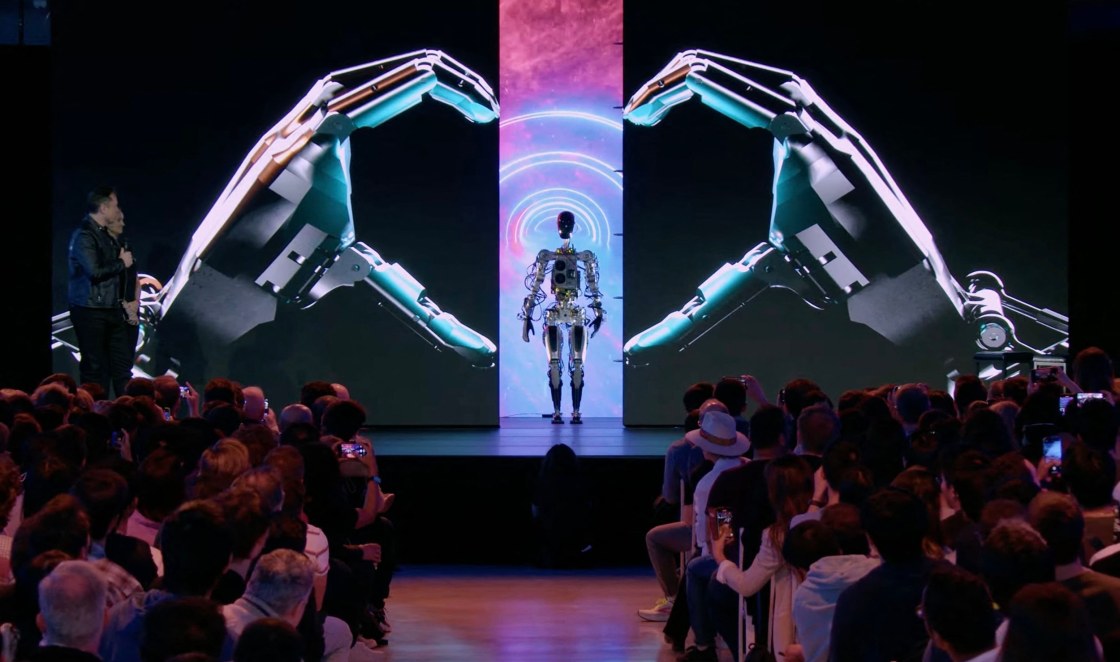
The competitive landscape features both established tech giants and well-funded startups. Tesla’s Optimus Gen 2, estimated at ~$30,000, targets both industrial and consumer applications [1]. Agility Robotics has factory capacity for 10,000 Digit units annually [1]. Figure AI secured a $1 billion funding round in 2025, while Apptronik raised approximately $403 million with partnerships including Amazon, Mercedes-Benz, and Walmart [1].
Notably, at least 15 Chinese automakers entered humanoid robotics in 2025, including GAC, SAIC, XPeng, and Xiaomi [1]. Unitree’s G1 model is described as “entirely decoupled from American components” [1], highlighting the growing geopolitical dimension of the robotics supply chain.
The investment landscape has matured significantly with the launch of specialized ETFs. The Roundhill Humanoid Robotics ETF (HUMN) launched on June 26, 2025, with a 0.75% expense ratio [5]. Other options include the Themes Humanoid Robotics ETF (BOTT), which tracks the Solactive Global Humanoid Robotics Index, and the KraneShares Global Humanoid and Embodied Intelligence Index ETF (KOID), the first U.S. ETF focused on humanoid robotics adoption [5].
Morgan Stanley notes that “adoption should be relatively slow until the mid-2030s, accelerating in the late 2030s and 2040s” [1]. This extended timeline suggests that a long-term investment horizon is appropriate. Industrial applications are leading the transition, with automotive manufacturers like BMW and Mercedes-Benz piloting humanoids [6], while consumer market adoption is expected to begin with early adopters in high-income households between 2025-2027.
Key technical challenges include battery life and power density limitations, safety and regulatory compliance requirements, human-robot interaction complexity, and manufacturing scalability. Safety standards for human-robot interaction, certification processes for commercial deployment, and liability frameworks are still evolving, with divergent regulatory approaches across major markets [1].
The consumer market entry will likely be price-driven, with targets below $20,000 for mass market adoption [3]. Service and assistance applications are expected to drive consumer demand, while industrial applications in logistics, warehouse automation, and manufacturing provide the initial commercial foothold.
The humanoid robotics industry represents a high-growth, early-stage technology sector with transformative potential. The transition from industrial to consumer applications marks a significant market expansion opportunity, though it introduces additional complexity in safety, reliability, and user experience requirements.
Investment opportunities span multiple approaches: diversified ETF exposure through HUMN, BOTT, and KOID; component suppliers in actuators, sensors, AI chips, and batteries; and application-specific segments in logistics, manufacturing, and consumer services. However, the extended adoption timeline and technical challenges suggest that careful due diligence and long-term perspective are essential.
The supply chain dynamics, particularly China’s 70% control of critical components, present both investment opportunities and strategic considerations for stakeholders in this rapidly evolving sector [1].
数据基于历史,不代表未来趋势;仅供投资者参考,不构成投资建议
关于我们:Ginlix AI 是由真实数据驱动的 AI 投资助手,将先进的人工智能与专业金融数据库相结合,提供可验证的、基于事实的答案。请使用下方的聊天框提出任何金融问题。