Rivian Turnaround Analysis: Binary Bet on R2 Success in 2026
解锁更多功能
登录后即可使用AI智能分析、深度投研报告等高级功能
关于我们:Ginlix AI 是由真实数据驱动的 AI 投资助手,将先进的人工智能与专业金融数据库相结合,提供可验证的、基于事实的答案。请使用下方的聊天框提出任何金融问题。
相关个股
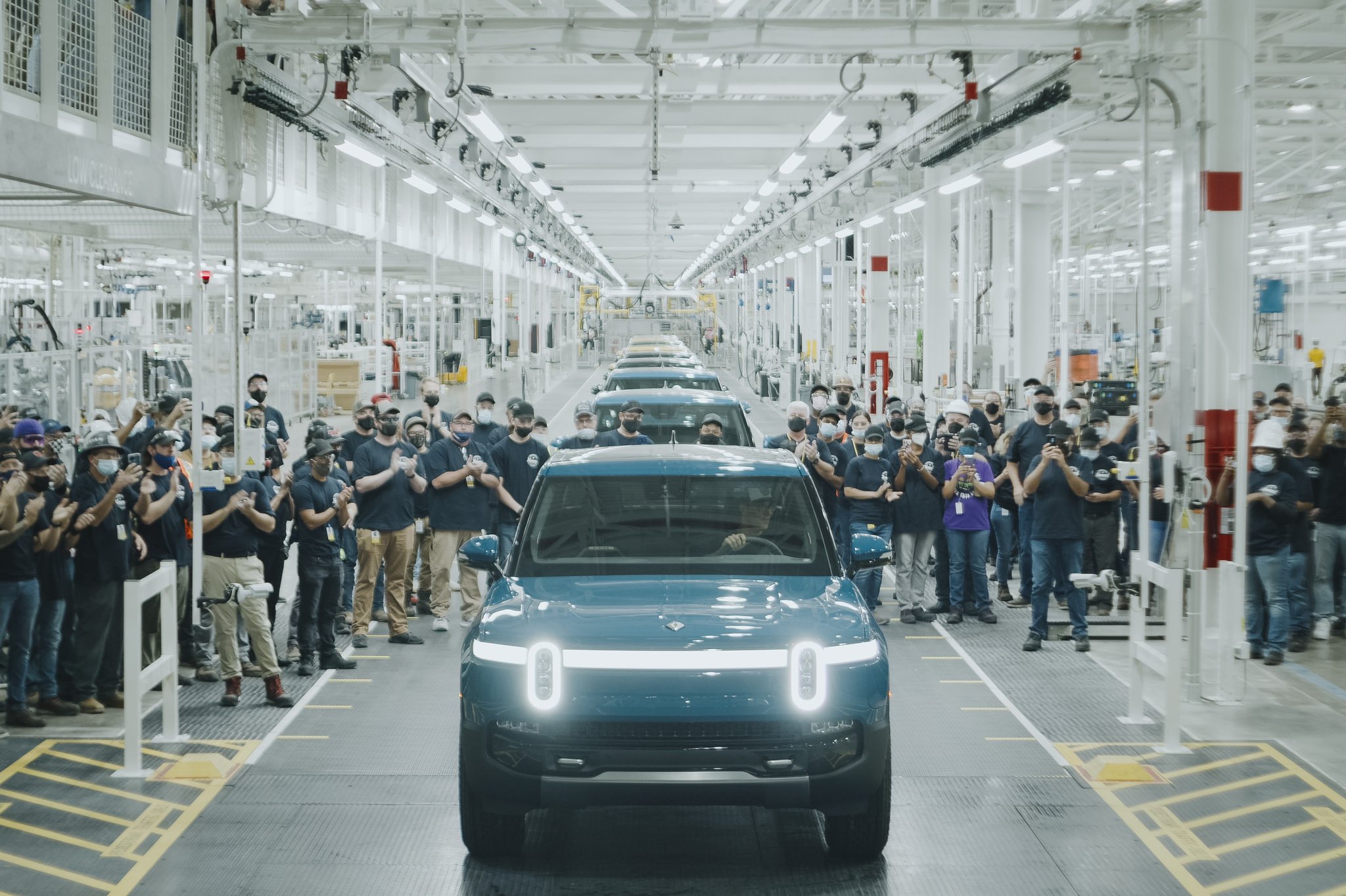
This analysis examines Rivian’s turnaround story based on market discussions and recent performance data. The investment thesis presents Rivian as a binary opportunity with extreme outcomes - either bankruptcy or potential 10x returns, contingent on successful mass production of the R2 SUV scheduled for 2026.
Rivian achieved a critical financial milestone in 2025 by recording its first positive gross margin, marking a significant shift from previous years of substantial losses [0]. The company’s Q3 2025 results demonstrated strong operational progress with record deliveries of 13,201 vehicles and revenue reaching $1.56 billion, representing 78% year-over-year growth [0]. Despite these improvements, Rivian maintains its full-year 2025 delivery guidance of 46,000 vehicles, indicating disciplined production scaling [0].
The stock performance has been remarkable, with shares surging 56.75% in 2025, significantly outperforming the S&P 500’s 13.35% gain [0]. Over a 90-day period, the stock gained 29%, contributing to a total shareholder return of 51% over the past year [0]. This momentum reflects growing investor confidence in the company’s turnaround strategy.
Rivian has secured substantial financial backing through strategic partnerships. Volkswagen has invested $1 billion with an additional $4 billion commitment, dramatically improving the company’s cash position and operational flexibility [0]. Additionally, the U.S. Department of Energy provided a $6.6 billion loan to support Georgia factory expansion, targeting increased production capacity to 400,000 vehicles annually [0].
The Amazon partnership remains a cornerstone of Rivian’s business foundation, with a confirmed order for 100,000 electric delivery vans representing approximately $5 billion in guaranteed revenue [0]. This commercial relationship provides baseline demand and cash flow stability as the company scales consumer vehicle production.
The R2 SUV, priced around $50,000 and scheduled for 2026 launch, represents the pivotal factor in Rivian’s turnaround narrative [1]. With over 100,000 reservations already accumulated, the R2 targets the mass market segment where volume potential exists for sustainable profitability [0]. The vehicle will launch initially in dual-motor configuration, positioning Rivian to compete more directly with established electric vehicle manufacturers [0].
The success of R2 mass production is widely viewed as the determining factor between Rivian’s survival and potential bankruptcy, versus achieving the projected 10x returns that some investors anticipate [1]. This binary outcome reflects the high-stakes nature of the automotive industry, where production scale and cost efficiency are paramount.
Despite recent progress, Rivian remains significantly smaller than established competitors like Tesla, which delivers nearly 2 million vehicles annually with a $1.32 trillion market capitalization [0]. This scale gap presents both challenges and opportunities - while Rivian lacks the production volume and brand recognition of Tesla, it also has greater growth potential if execution succeeds.
The board approved a CEO compensation package worth up to $4.6 billion, tied directly to profit targets and stock price milestones [0]. This Musk-like pay structure aligns executive incentives with shareholder returns but also reflects the high-risk, high-reward nature of the investment thesis [2].
Rivian’s Georgia factory expansion, supported by federal funding, aims to address the critical production scaling challenge [0]. The company’s ability to achieve cost efficiencies through volume production will be essential for maintaining the positive gross margin trend and achieving sustainable profitability.
Rivian’s turnaround story has gained credible momentum through several key developments: achieving positive gross margin, securing substantial strategic investments, accumulating strong R2 reservations, and demonstrating operational improvements in production and delivery metrics [0]. The company’s partnership with Amazon provides revenue stability, while VW’s financial backing supports expansion plans [0].
However, the investment thesis remains inherently binary, with success heavily dependent on flawless execution of R2 mass production in 2026 [1]. The company’s current scale (46,000 annual deliveries) represents a fraction of established competitors, though this also provides substantial growth potential if execution succeeds [0].
The 2026 R2 launch will serve as the definitive catalyst, determining whether Rivian achieves sustainable profitability and market leadership position, or faces continued financial challenges in the capital-intensive automotive industry [1]. Investors holding 2028 $30 calls targeting $100-200 price levels by 2027-28 are essentially betting on successful mass production scaling and sustained operational excellence [1].
数据基于历史,不代表未来趋势;仅供投资者参考,不构成投资建议
关于我们:Ginlix AI 是由真实数据驱动的 AI 投资助手,将先进的人工智能与专业金融数据库相结合,提供可验证的、基于事实的答案。请使用下方的聊天框提出任何金融问题。