Supreme Court Tariff Case: Market Implications of Potential Legal Ruling
解锁更多功能
登录后即可使用AI智能分析、深度投研报告等高级功能
关于我们:Ginlix AI 是由真实数据驱动的 AI 投资助手,将先进的人工智能与专业金融数据库相结合,提供可验证的、基于事实的答案。请使用下方的聊天框提出任何金融问题。
This analysis is based on a Reddit post [0] published on November 8, 2025, exploring potential macroeconomic consequences if tariffs are ruled illegal by the Supreme Court, supplemented by current market data and legal analysis.
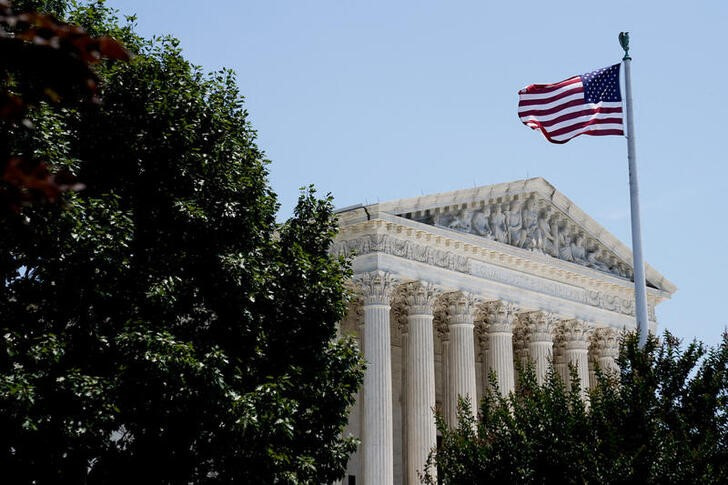
The U.S. Supreme Court heard oral arguments on November 5, 2025, regarding whether the International Emergency Economic Powers Act (IEEPA) authorizes Trump Administration tariffs [1]. Justices across the ideological spectrum questioned whether IEEPA authorizes sweeping tariffs, a power traditionally reserved for Congress under Article I of the Constitution [1]. Lower courts have already concluded that IEEPA does not authorize such expansive tariff powers [1].
The case centers on two sets of tariffs: (1) tariffs tied to fentanyl trafficking and illegal immigration targeting China, Canada, and Mexico, and (2) broadly applied “reciprocal” tariffs on most countries justified by trade deficits and national security concerns [1]. This represents an unprecedented expansion of executive power in trade policy.
Current market data shows mixed performance across major indices. On November 7, 2025, U.S. markets were positive: S&P 500 +0.49%, NASDAQ +0.49%, Dow Jones +0.41%, Russell 2000 +1.03% [0]. Chinese markets were negative: Shanghai Composite -0.25%, Shenzhen Component -0.36%, ChiNext -0.51% [0].
The Reddit post’s speculation about a 2029 bond “default” timeline appears to be a mischaracterization of debt sustainability challenges. Rather than an actual default risk, the concern is about debt reaching unsustainable levels. U.S. debt already stood at 120% of GDP in 2024 [4], and Federal Reserve Chairman Jay Powell has expressed concern that “the level of the debt is sustainable, but the path is not” [4].
If tariffs are ruled illegal, customs officials may be forced to refund more than $90 billion in already collected tariff revenue [2]. The post’s $180 billion figure appears to be an overestimation. Justice Amy Coney Barrett noted that administering refunds “could be a mess” for the courts [3], and the refund process could take up to a year through the Customs and Border Protection’s Automated Customs Environment processing system [3].
The most significant aspect of this case is not the immediate economic impact but the constitutional precedent it sets. A ruling against executive tariff authority would fundamentally reshape the balance of power between the executive and legislative branches in trade policy, potentially affecting future trade negotiations and policy implementation for decades.
The Reddit post presents an oversimplified binary scenario (bond weakness vs. refund stimulus). In reality, market reactions would be far more complex:
- Tariff refunds would primarily benefit importers who paid the duties, not provide broad market stimulus
- Loss of future tariff revenue would impact federal budget projections but would be gradual
- Markets would likely focus more on constitutional implications and trade policy uncertainty than immediate fiscal impact
The post’s reference to a 2029 bond “default” timeline conflates debt sustainability challenges with actual default risk. Analysis suggests that keeping real debt service below 2% of GDP would require significant primary balance increases: 3.5 percentage points by 2025, 3.9 by 2029, and 5.4 by 2035 [4]. This represents a fiscal challenge, not a default scenario.
- Extended legal challenges could delay refunds for years, creating prolonged uncertainty
- Market reaction may be disproportionate to actual economic impact
- Political response could include new tariff legislation or alternative revenue measures
- Trade policy uncertainty could affect business investment decisions
- Potential strengthening of the dollar if tariffs are struck down (reducing inflationary pressure)
- Increased clarity on trade policy boundaries could benefit long-term business planning
- Possible rebalancing of supply chains as companies reassess import strategies
The refund process presents significant logistical hurdles. As customs lawyer Joseph Spraragen noted, “If they’re illegal today, they were illegal in February 2025 and in April, when the reciprocal tariffs kicked in” [3]. This creates complex legal questions about which payments qualify for refunds and how to process claims efficiently.
- The Supreme Court decision is expected in coming months, creating a period of uncertainty
- The $90 billion refund figure [2] is more credible than the post’s $180 billion speculation
- Bond “default” concerns are more accurately described as debt sustainability challenges
- Current market performance shows resilience, with U.S. indices positive on November 7 [0]
- Supreme Court ruling expected in coming months
- Refund process could take up to a year if required [3]
- Fiscal impact would be gradual rather than immediate
- Minimal direct impact expected as the legal process will take time to resolve
- Increased volatility in trade-sensitive sectors during the decision period
- Focus likely to shift from immediate fiscal impact to longer-term structural implications
The analysis reveals that while the Reddit post raises valid questions about the economic implications of the Supreme Court case, it contains significant factual inaccuracies regarding refund amounts and mischaracterizes debt sustainability challenges as default risks. The actual market impact is likely to be more nuanced and focused on constitutional precedent rather than immediate fiscal consequences.
数据基于历史,不代表未来趋势;仅供投资者参考,不构成投资建议
关于我们:Ginlix AI 是由真实数据驱动的 AI 投资助手,将先进的人工智能与专业金融数据库相结合,提供可验证的、基于事实的答案。请使用下方的聊天框提出任何金融问题。