Geopolitical Risk Analysis: US-Iran Tensions and Market Implications
解锁更多功能
登录后即可使用AI智能分析、深度投研报告等高级功能
关于我们:Ginlix AI 是由真实数据驱动的 AI 投资助手,将先进的人工智能与专业金融数据库相结合,提供可验证的、基于事实的答案。请使用下方的聊天框提出任何金融问题。
相关个股
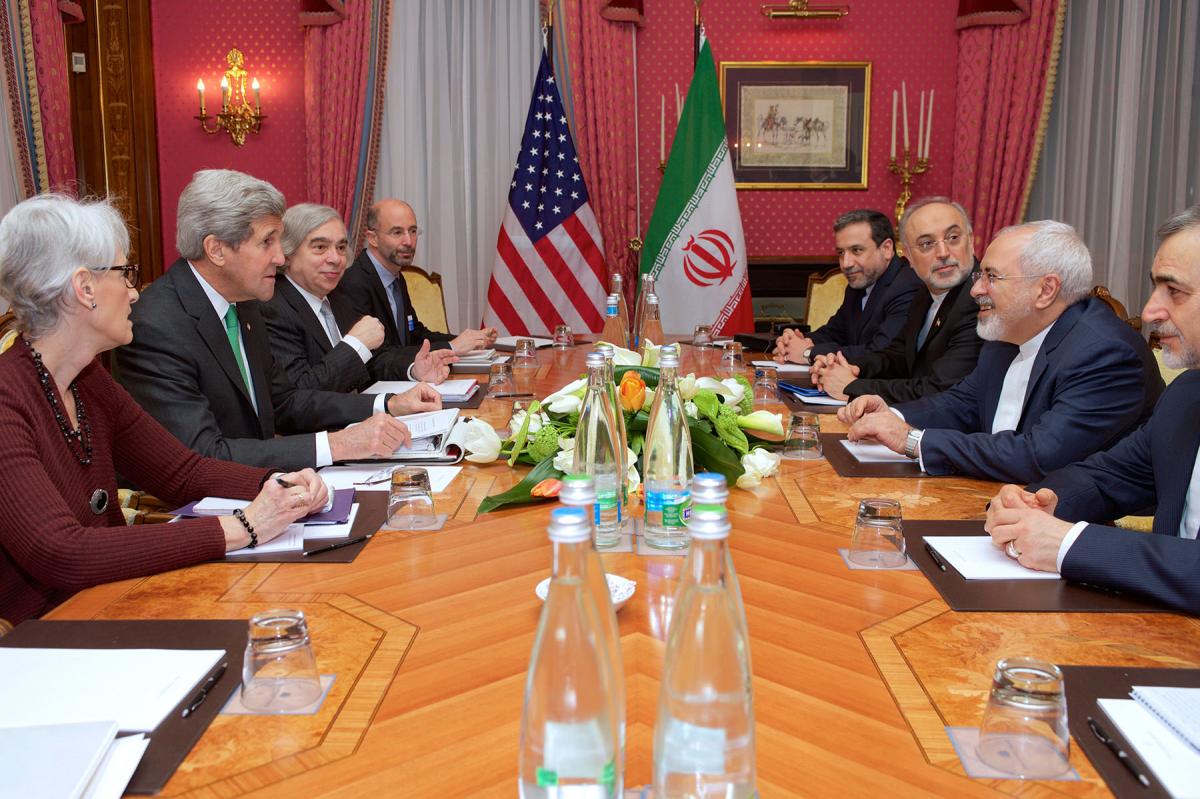
Based on comprehensive analysis of current diplomatic developments, energy market dynamics, and defense sector valuations, this report examines how potential US-Iran diplomatic negotiations or military scenarios could impact energy sector valuations and defense stock performance.
The Trump administration is actively weighing its response to ongoing unrest in Iran, with senior officials presenting a range of options from diplomatic engagement to potential military strikes. According to recent reports [1][2]:
- Vice President JD Vance, Secretary of State Marco Rubio, and National Security Council officialsmet on January 10, 2026, to prepare options for the President
- White House Press Secretary Karoline Leavittstated that “air strikes would be one of the many, many options” while emphasizing that “the president always prefers diplomacy” [1][3]
- The prevailing assessment among US, Israeli, and European officials indicates Trump has decided to take action, with the remaining questions being “how?” and “when?” [3]
- Leavitt noted that “the messages the Iranian regime sends us privately are different from those it delivers publicly” [1]
Protests have spread across 22 provinces in Iran since late December 2025, with the government imposing a near-total internet blackout since January 8, 2026 [4].
The energy sector’s response to US-Iran tensions presents a nuanced picture characterized by competing forces:
| Metric | Current Value | Historical Context |
|---|---|---|
| WTI Crude | ~$59.50/barrel | Up ~3% this week on tensions |
| Brent Crude | ~$63.87/barrel | Up ~0.8% on geopolitical risk premium |
| Global Supply Surplus (2026 IEA) | 3.8 million bpd | Record oversupply limiting price gains |
- Risk Premium: Oil markets have added a geopolitical risk premium as protests intensify in Iran and the US signals a return to “maximum pressure” sanctions [4][5]
- Iran Export Risk: Iran produces nearly 4 million barrels per day (~4% of global supply), and protests among oil-industry workers raise concerns about export disruption [5]
- Strait of Hormuz Vulnerability: Approximately 20 million barrels per day transit the Strait, representing ~20% of global liquid petroleum consumption [4]
- Record Supply Surplus: The International Energy Agency projects a massive 3.8 million bpd global oil surplus in 2026, driven by non-OPEC production [4]
- US Tariff Threat: Trump’s 25% tariff threat on nations doing business with Iran may further constrain Iranian exports but also dampen global demand [2]
| Stock | Price | Daily Change | P/E Ratio | Market Cap |
|---|---|---|---|---|
| Exxon Mobil (XOM) | $123.98 | -0.50% | 18.02x | $522.87B |
| Chevron (CVX) | $162.34 | +0.14% | 22.80x | $324.58B |
| XLE (Energy Select ETF) | $46.34 | +0.09% | N/A | N/A |
The Energy sector’s modest +0.09% gain on January 13, 2026 [6] reflects investor uncertainty about the ultimate resolution of the diplomatic situation.
Defense stocks have shown resilience amid elevated geopolitical tensions:
| Stock | Price | Daily Change | P/E Ratio | 52-Week High |
|---|---|---|---|---|
| Lockheed Martin (LMT) | $551.24 | +1.53% | 30.68x | $554.27 |
| Raytheon (RTX) | $193.85 | +2.84% | 39.89x | $196.70 |
| Northrop Grumman (NOC) | $629.32 | +1.70% | 22.65x | $640.90 |
The defense sector trades at significant premiums to historical norms [7]:
- Sector P/E: 44.8x, substantially above the 3-year average of 32.1x
- Lockheed Martin: P/E of 27.27, forward P/E of 21.9x
- Raytheon Technologies: P/E of 37.87, forward P/E of 28.9x
- Northrop Grumman: Forward P/E of 22.9x
- Historic Defense Budget: The Trump administration has proposed a $1.5 trillion 2027 defense budget, representing a 66% increase [7]
- National Defense Authorization Act (NDAA) 2026: Integrates defense with AI, cybersecurity, and supply chain resilience, broadening investor appeal [7]
- Global Rearmament: European defense stocks (BAE Systems, Rheinmetall) hit all-time highs; LMT and NOC gained 7.9% and 8.3% respectively in recent periods [7]
- NATO Spending Agreement: European countries committed to raising defense spending to 5% of national income over the next decade [8]
Probability: Moderate (estimated 30-40%)
- Energy Sector: Oil prices could decline 3-5% as risk premium dissipates; energy stocks may experience modest pullback
- Defense Sector: Defense stocks could see 2-4% decline as immediate conflict premium fades; long-term budgets remain supportive
- Market Impact: Broad market relief rally; rotation from defense into growth and cyclical sectors
Probability: Moderate (estimated 40-50%)
- Energy Sector: Oil prices could spike 5-10% if Iranian exports threatened; prolonged conflict could drive prices toward $70-75/barrel
- Defense Sector: Defense stocks likely rise 3-6% on increased order expectations; RTX and LMT benefit from potential missile defense and aircraft demand
- Market Impact: Short-term volatility spike; flight to safety into US Treasuries and defensive sectors
Probability: Low (estimated 10-20%)
- Energy Sector: Oil prices could surge 15-25% if Strait of Hormuz disrupted; energy stocks experience significant gains but with high volatility
- Defense Sector: Defense stocks could appreciate 8-15% on sustained order flow; valuations become easier to justify
- Market Impact: Broad market sell-off; sector rotation into energy and defense; increased volatility across asset classes
- Oil Price Correlation: Energy stocks remain sensitive to crude price movements; maintain exposure to companies with strong balance sheets (XOM, CVX) to weather volatility
- Supply/Demand Fundamentals: Record 2026 surplus provides ceiling on price gains even amid tensions
- Tariff Risk: Trump’s 25% tariff threat on nations doing business with Iran creates additional market uncertainty [2]
- Valuation Risk: The sector’s elevated P/E ratios (44.8x sector vs. 32.1x 3-year average) assume perpetual geopolitical instability [7]
- Budget Dependency: Defense stocks are exposed to budget cuts if tensions ease or fiscal discipline returns
- Diversification: Consider balancing exposure to major defense contractors with smaller, specialized suppliers
- Long-term Structural Support: NATO spending commitments and NDAA reforms provide multi-year demand visibility
- Policy Reversal: If diplomatic solutions succeed, defense spending expectations could normalize rapidly
- Fiscal Constraints: Multi-trillion dollar budget increases may face inflation and political resistance [7]
- Macroeconomic Risks: Potential AI-driven asset bubble crisis could affect growth stock valuations broadly [7]
The Energy sector’s modest +0.09% gain on January 13, 2026 [6] reflects market uncertainty about the ultimate resolution. In contrast, defense stocks showed stronger performance:
- RTX (Raytheon): +2.84% — highest daily gain among major defense contractors
- NOC (Northrop Grumman): +1.70%
- LMT (Lockheed Martin): +1.53%
This divergence suggests investors are pricing in elevated defense spending expectations while remaining cautious about energy market implications pending resolution of the diplomatic situation.
US-Iran tensions present a complex risk-reward scenario for energy and defense investors. The diplomatic path would likely benefit broader markets while pressuring energy and defense sector outperformance. Military scenarios would temporarily boost both sectors but with increased volatility and uncertain duration.
The key variables to monitor are:
- Outcome of Trump’s Tuesday meetingwith senior national security officials [2][3]
- Iran’s responseto escalating US pressure and internal protests
- Oil market reactionto evolving supply disruption risks
- Defense budget trajectoryas Congress processes NDAA 2026 and FY2027 proposals
Given current valuations, defense sector appears to be pricing in continued tensions, leaving limited upside if diplomatic solutions emerge. Energy sector valuations remain more reasonable but face headwinds from record global supply surpluses regardless of geopolitical developments.
[1] Al Jazeera - “Trump administration says still considering military strikes on Iran” (January 12, 2026)
[2] Axios - “Trump leans toward Iran strikes but keeps diplomacy open for now” (January 12, 2026)
[3] The Jerusalem Post - “Donald Trump weighs military, diplomatic options for Iran” (January 2026)
[4] WION - “U.S. vs. Iran: How a war could affect global oil prices” (January 11, 2026)
[5] Morningstar/MarketWatch - “Why oil prices could rise as U.S.-Iran tensions swell” (January 12, 2026)
[6] Tipranks - “Trump’s Iran ‘Freedom’ Message May Lift Energy and Defense Stocks” (January 2026)
[7] AInvest - “Are Defense Stocks Overvalued Despite Rising Tensions in 2026?” (January 10, 2026)
[8] Stanberry Research - “Top Defense Stocks to Watch as Venezuela and Iran Tensions Rise” (2026)
数据基于历史,不代表未来趋势;仅供投资者参考,不构成投资建议
关于我们:Ginlix AI 是由真实数据驱动的 AI 投资助手,将先进的人工智能与专业金融数据库相结合,提供可验证的、基于事实的答案。请使用下方的聊天框提出任何金融问题。