U.S. Equity Markets Surge on Greenland Framework Agreement Announcement
解锁更多功能
登录后即可使用AI智能分析、深度投研报告等高级功能
关于我们:Ginlix AI 是由真实数据驱动的 AI 投资助手,将先进的人工智能与专业金融数据库相结合,提供可验证的、基于事实的答案。请使用下方的聊天框提出任何金融问题。
The dramatic market reversal observed on January 21 reflects the extraordinary sensitivity of equity valuations to geopolitical developments involving potential trade disruptions and territorial negotiations. On January 20, 2026, markets had responded negatively to earlier Trump administration statements regarding Greenland, with the S&P 500 experiencing a valuation decline of approximately $750 billion as investors priced in potential trade war scenarios and geopolitical instability [1]. The subsequent announcement at Davos, delivered jointly with NATO Secretary General Mark Rutte, fundamentally altered market expectations by signaling a cooperative rather than confrontational approach to Arctic regional matters.
The framework agreement, while lacking disclosed specific terms, appears to establish a diplomatic pathway for addressing U.S. interests in the Arctic region without the immediate imposition of trade barriers that would have affected European NATO allies. Trump stated that he and Rutte “formed the framework of a future deal with respect to Greenland and, in fact, the entire Arctic Region,” indicating a broader strategic understanding that extends beyond the specific territorial question of Greenland [1][2]. The negotiation team designated to advance these discussions includes Vice President JD Vance, Secretary of State Marco Rubio, and Special Envoy Steve Witkoff, suggesting a high-level diplomatic commitment to implementing the announced framework [2].
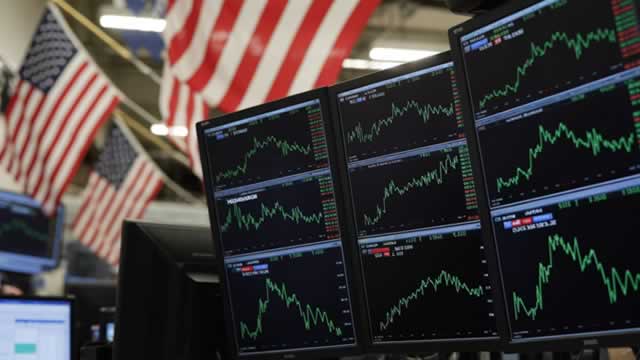
The market response to the announcement demonstrated broad-based participation across major indices, with the Dow Jones Industrial Average advancing 677 points to approximately 49,000, the S&P 500 gaining 1.6% to reach around 6,000, and the Nasdaq Composite also advancing 1.6% to approximately 20,000 [1]. The synchronized nature of the rally across different indices indicates that the positive sentiment was not confined to any particular sector but rather reflected a general reduction in risk premiums associated with the previously threatened trade disruptions.
The 10-year U.S. Treasury yield experienced a slight decline to approximately 4.257% during the trading session, reflecting a modest flight to quality even as equity markets advanced [1]. This combination of rising equities and falling yields suggests that investors perceived a reduction in tail risk scenarios rather than an improvement in the fundamental growth outlook. The tariff cancellation removes an immediate economic headwind that had been priced into European and U.S. market valuations, but the underlying structural concerns about transatlantic trade relationships and Arctic security architecture remain subject to ongoing negotiation.
A critical factor affecting market interpretation of this development is the significant information asymmetry between official announcements and concrete policy details. The White House has not responded to requests for additional details regarding the framework agreement, leaving investors to assess the announcement based on limited information [2]. This ambiguity introduces uncertainty into market pricing, as participants must evaluate the probability-weighted outcomes of various potential framework implementations without authoritative guidance on the likely parameters of any final agreement.
The previous day’s market reaction underscores the volatility that Greenland-related announcements can generate, with the Dow experiencing swings exceeding 1,400 points across two trading sessions in response to evolving information about administration intentions toward the Arctic territory [2]. Such volatility patterns suggest that market participants should anticipate continued sensitivity to future announcements regarding negotiation progress, congressional reactions to the framework, and European government responses to the tariff cancellation.
The simultaneous announcement of the Greenland framework and tariff cancellation represents a significant recalibration of U.S.-European relations that had been strained by the preceding day’s rhetoric. By linking tariff relief to cooperation on Arctic security matters, the administration has established a framework for bilateral engagement that transforms a potential trade conflict into a collaborative strategic initiative. This approach may establish a template for future U.S. negotiations with European partners, where economic concessions are tied to security cooperation rather than pursued as independent policy objectives.
The participation of NATO Secretary General Rutte in the announcement validates the alliance framework as the preferred mechanism for addressing Arctic security concerns, potentially insulating the Greenland negotiations from bilateral tensions that might otherwise complicate progress [2]. This multilateral approach may reduce implementation risk for the framework agreement while providing European governments with diplomatic cover for engaging in discussions that might otherwise be characterized as accommodation of U.S. territorial interests.
The designation of senior officials—including the Vice President, Secretary of State, and a Special Envoy—to lead subsequent negotiations signals that the framework agreement represents the beginning rather than the conclusion of a complex diplomatic process [2]. Investors should anticipate that meaningful progress toward concrete agreements will require sustained engagement over an extended timeframe, with multiple opportunities for positive or negative market reactions as details emerge.
The absence of disclosed specific terms leaves open significant questions about the ultimate scope of any Greenland arrangement, the extent of U.S. economic or military involvement in the territory, and the implications for existing Danish sovereignty and European Union interests in the region. These uncertainties suggest that market volatility associated with Greenland-related news may persist throughout the negotiation process, with sentiment likely to shift in response to both official statements and journalistic investigations of administration intentions.
The analysis reveals several risk factors that warrant attention from market participants evaluating exposure to continued Greenland-related volatility. First, the framework ambiguity risk is substantial, as no specific terms have been disclosed and the actual implementation may differ significantly from market expectations currently reflected in equity valuations [2]. Investors should be aware that the current rally could reverse if subsequent announcements reveal that the framework lacks substantive commitments or faces significant opposition from European stakeholders.
Second, the geopolitical uncertainty persists despite the cooperative framework, as the underlying U.S. interest in Greenland remains a potential source of tension with Denmark, the European Union, and potentially other Arctic stakeholders. The tariff cancellation removes an immediate economic pressure point, but the territorial dimensions of the framework could generate new sources of friction as negotiations proceed. Third, the information verification challenge remains, with limited secondary source verification available beyond the initial announcement, creating opportunities for market overreaction to incomplete or inaccurate information [2].
Fourth, the extreme market sensitivity demonstrated by the 1,400-plus point swing in the Dow across two trading sessions indicates that position sizing should account for continued volatility until a clearer picture of framework implementation emerges. Companies with Arctic operations, mining interests, defense contracts, or energy sector exposure may face elevated policy risk that could affect valuations independently of broader market movements.
The resolution of immediate tariff threats creates a window for reduced uncertainty affecting European-exposed U.S. multinational corporations and companies with significant transatlantic supply chains. The removal of the February 1 tariff implementation date eliminates a specific deadline that had been generating risk premiums in market pricing, potentially benefiting consumer goods, industrial, and technology sectors with substantial European revenue exposure.
Additionally, the establishment of a formal negotiation framework may create opportunities for companies positioned to benefit from increased Arctic economic activity, including mining companies with Greenland interests, defense contractors potentially involved in Arctic security infrastructure, and energy companies with Arctic exploration or production capabilities. However, investors should note that such opportunities remain speculative pending disclosure of specific framework terms and implementation timelines.
This analysis is based on the Forbes report [1] published on January 21, 2026, which reported that U.S. stock markets experienced a significant rebound following President Donald Trump’s announcement of a “framework of a future deal” regarding Greenland and the Arctic Region at the World Economic Forum in Davos, Switzerland. The announcement, made jointly with NATO Secretary General Mark Rutte, included the cancellation of planned punitive tariffs on European NATO nations that had been scheduled for February 1, 2026 [1].
Market reaction was strongly positive, with the Dow Jones Industrial Average advancing 677 points (1.4%), the S&P 500 gaining 1.6%, and the Nasdaq Composite also advancing 1.6% as of 3:15 PM EST [1]. The previous day had seen approximately $750 billion in S&P 500 value erosion amid uncertainty about trade war escalation, illustrating the extreme sensitivity of market valuations to Greenland-related developments [1].
Key uncertainties affecting the outlook include the absence of disclosed specific terms for the Greenland framework, the designated negotiation team composition including VP Vance, Secretary Rubio, and Special Envoy Witkoff, and the potential for European government responses to influence implementation prospects [2]. The White House has not provided additional details beyond the initial announcement, and ongoing monitoring of official statements and negotiation progress will be necessary to assess the ultimate implications of this development for markets and corporate valuations.
数据基于历史,不代表未来趋势;仅供投资者参考,不构成投资建议
关于我们:Ginlix AI 是由真实数据驱动的 AI 投资助手,将先进的人工智能与专业金融数据库相结合,提供可验证的、基于事实的答案。请使用下方的聊天框提出任何金融问题。