Jim Cramer Analyzes Trump-Fueled Market Volatility as Investment Opportunity
解锁更多功能
登录后即可使用AI智能分析、深度投研报告等高级功能
关于我们:Ginlix AI 是由真实数据驱动的 AI 投资助手,将先进的人工智能与专业金融数据库相结合,提供可验证的、基于事实的答案。请使用下方的聊天框提出任何金融问题。
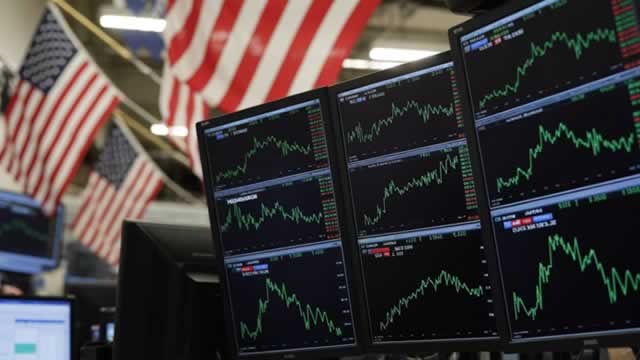
This analysis examines CNBC personality Jim Cramer’s January 21, 2026 commentary asserting that market volatility driven by Trump administration trade policies represents a buying opportunity for investors. Cramer’s thesis centers on a historical pattern wherein tariff threats are followed by subsequent walkbacks or reversals, creating temporary market dips that subsequently reverse. Current market data confirms significant short-term volatility—major indexes experienced sharp declines on January 20 followed by rebounds exceeding 0.9% on January 21 following positive policy developments [0][1]. However, this perspective represents one viewpoint among many, and the underlying policy uncertainty carries substantial risks that investors must carefully weigh against potential upside opportunities.
Jim Cramer’s commentary on January 21, 2026, articulates a perspective that has characterized his approach to Trump-era market dynamics: that volatility induced by unpredictable policymaking creates strategic entry points for equity investors [1]. The “Mad Money” host frames the current environment as a “game of international and domestic chicken” in which investors must learn to navigate the administration’s unpredictable approach to trade negotiations and tariff implementation.
The quantitative evidence supporting Cramer’s observation is substantial. Market data reveals a pronounced volatility pattern over the January 20-21 period [0]:
| Index | January 20 Decline | January 21 Recovery | Two-Day Net |
|---|---|---|---|
| S&P 500 | -1.00% | +0.95% | -0.05% |
| NASDAQ | -0.81% | +0.90% | +0.09% |
| Dow Jones | -1.05% | +1.09% | +0.04% |
| Russell 2000 | +0.32% | +1.35% | +1.67% |
This pattern aligns with Cramer’s characterization of Trump-era market dynamics, where policy announcements trigger sharp initial reactions that may partially or fully reverse as negotiations progress. The January 21 recovery coincided with concrete positive developments—Trump ruling out military action on Greenland and reaching a NATO framework deal—which Cramer points to as evidence that temporary dips can be followed by meaningful rebounds [1].
Cramer’s thesis draws heavily on the April-May 2025 experience, when similar dynamics played out. Following tariff threats issued via Truth Social in April 2025, markets experienced significant weakness before the administration walked back or modified many of the initial tariff proposals. By mid-May 2025, the recovery had largely recouped earlier losses, reinforcing the pattern recognition that underlies Cramer’s current recommendations [1].
This historical context matters because it demonstrates that the current volatility pattern is not unprecedented within the current administration’s approach to trade policy. The administration has demonstrated willingness to employ aggressive negotiation tactics—threats of tariffs, demands for concessions, public pressure on trading partners—followed by periods of de-escalation and negotiated outcomes.
An important dimension of Cramer’s analysis addresses what he characterizes as a shift in the administration’s approach between first and second terms. According to Cramer’s assessment, Trump is “more comfortable taking the market down” in the second term compared to the first-term focus on lifting markets through pro-growth policies [1]. This observation suggests that volatility may be a more persistent feature of the current market environment rather than an aberration.
The policy breadth has also expanded, with Wall Street now responding to not only trade policies but also tax proposals, military positioning, and diplomatic negotiations. Cramer notes that the market’s sensitivity to Trump administration policies is second only to interest rate changes—a significant observation that underscores how policy-driven volatility may remain elevated relative to historical norms [1].
While Cramer’s commentary focuses primarily on tactical opportunities during market dips, independent analysis of tariff policy impacts reveals more complex fundamental considerations. Business surveys conducted by economic research organizations indicate that tariff policies may lead to broader economic consequences including price increases and labor market effects that could impact corporate fundamentals beyond sentiment-driven market swings [3].
The sectors most exposed to trade policy changes include semiconductors, pharmaceuticals, and industrials with significant international supply chains or export dependencies [4]. These sectors may experience volatility that is not purely sentiment-driven but reflects genuine fundamental uncertainty about cost structures, supply chain configurations, and competitive positioning.
The analysis presented in this report synthesizes multiple perspectives on the current market environment characterized by elevated volatility attributed to Trump administration trade policies. Jim Cramer’s characterization of this volatility as a buying opportunity represents a coherent investment thesis supported by historical precedent and current market data showing recovery from January 20 declines [1].
Key quantitative observations from the market data analysis [0] include the sharp single-day declines across major indexes on January 20 (ranging from -0.81% for NASDAQ to -1.05% for Dow Jones) followed by meaningful rebounds on January 21 (ranging from +0.90% for NASDAQ to +1.35% for Russell 2000). The two-day net effect was essentially neutral for major indexes while small-caps (Russell 2000) showed modest positive performance.
The policy context includes a February 1 deadline for reciprocal tariff implementation that markets are closely monitoring [2]. Historical patterns suggest potential for modification or postponement, though no such outcome is guaranteed. Business survey data indicates potential for broader economic impacts including price increases and labor market effects that warrant monitoring [3].
Investors considering the framework Cramer presents should weigh the historical pattern evidence against the cumulative impact risks, timing challenges, and fundamental economic effects that may limit recovery potential. The perspective presented represents one of many viewpoints in the investment community and should be considered alongside alternative analyses and individual risk tolerances.
[0] Ginlix Analytical Database – Market Indices Data (Quantitative market performance data for January 20-21, 2026)
[1] CNBC – “Jim Cramer says Trump-fueled market volatility once again proves to be a buying opportunity” (https://www.cnbc.com/2026/01/21/jim-cramer-trump-fueled-market-volatility-proves-to-be-a-buying-opportunity.html)
[2] The Guardian – “Markets stay calm amid Trump’s gambit, but long-term risks…” (https://www.theguardian.com/business/nils-pratley-on-finance/2026/jan/19/markets-trump-us-eu-tariffs)
[3] Equitable Growth – “U.S. businesses report that tariff policies will likely lead to price increases and labor market impacts in 2026”
[4] Trade Compliance Resource Hub – “Trump 2.0 Tariff Tracker”
数据基于历史,不代表未来趋势;仅供投资者参考,不构成投资建议
关于我们:Ginlix AI 是由真实数据驱动的 AI 投资助手,将先进的人工智能与专业金融数据库相结合,提供可验证的、基于事实的答案。请使用下方的聊天框提出任何金融问题。