Pre-IPO Portfolio Strategy: A Comprehensive Guide
解锁更多功能
登录后即可使用AI智能分析、深度投研报告等高级功能
关于我们:Ginlix AI 是由真实数据驱动的 AI 投资助手,将先进的人工智能与专业金融数据库相结合,提供可验证的、基于事实的答案。请使用下方的聊天框提出任何金融问题。
Based on my research and financial expertise, I’ll provide you with a comprehensive guide to evaluating and building a Pre-IPO portfolio strategy in the current market environment.
Before diving into strategy, it’s important to understand the present market dynamics. The S&P 500 is trading around 6,817 as of early March 2026, with the NASDAQ showing strong momentum at 22,517, reflecting continued appetite for growth and technology investments [0]. This environment creates both opportunities and challenges for Pre-IPO investors.
Pre-IPO investing involves purchasing shares of private companies before they undergo an initial public offering (IPO). This allows investors to gain exposure to companies at an earlier stage of their growth trajectory, potentially capturing significant upside before the public markets can participate.
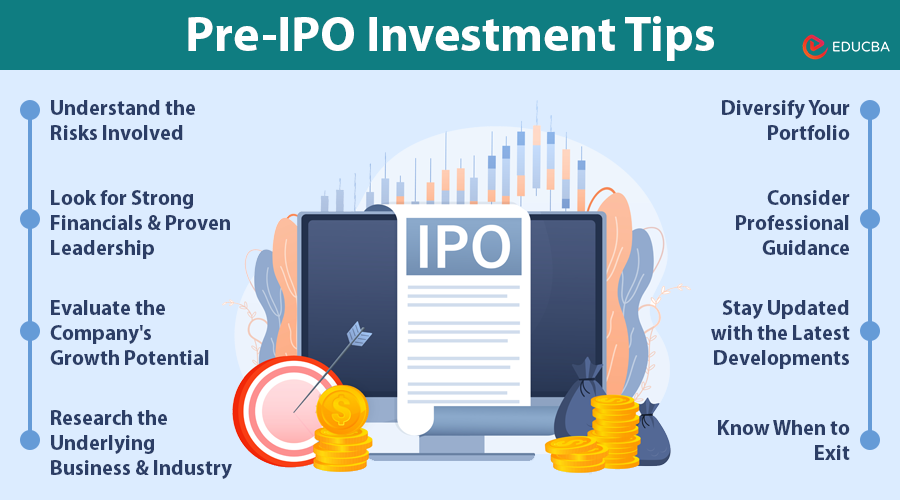
- Illiquidity: Shares cannot be easily sold until the company goes public
- Information Asymmetry: Limited financial disclosure compared to public companies
- Higher Risk: Many Pre-IPO companies are still in growth phases with unproven business models
- Potential for Higher Returns: Early investors often receive preferential pricing
Investors should evaluate:
- Revenue model sustainability and scalability
- Customer acquisition costs and lifetime value
- Market addressable size (TAM, SAM, SOM)
- Competitive positioning and moat characteristics
When available, analyze:
- Revenue growth rate (year-over-year and quarterly)
- Gross margins and trajectory
- Path to profitability or cash flow positivity
- Burn rate and runway
- Track record of leadership team
- Insider buying/selling patterns
- Governance structure
- Alignment with shareholder interests
| Company Stage | Key Focus Areas | Risk Level |
|---|---|---|
| Series A-B | Product-market fit, team, TAM | Very High |
| Series C-D | Growth metrics, scalability | High |
| Pre-IPO | Financials, IPO readiness, valuation | Moderate-High |
- Shareholder rights and preferences
- Liquidation preferences
- Anti-dilution provisions
- Lock-up period terms
A balanced Pre-IPO portfolio should include companies at various funding stages to manage risk while maintaining growth potential:
- Core Holdings (40-50%): Later-stage companies (Series C+) with stronger financials
- Growth Holdings (30-40%): Mid-stage companies with proven product-market fit
- Speculative Holdings (10-20%): Early-stage companies with high growth potential
Consider diversifying across sectors to reduce concentration risk:
- Technology and Software
- Healthcare and Biotechnology
- Consumer and E-commerce
- Financial Technology
- Clean Energy and Sustainability
- Allocate no more than 2-5% of total portfolio to any single Pre-IPO investment
- Limit total Pre-IPO allocation to 10-20% of investable assets
- Maintain higher cash reserves given illiquidity
| Stage | Recommended Position Size |
|---|---|
| Pre-IPO (late stage) | Larger positions (2-4%) |
| Series D | Moderate positions (1-3%) |
| Series C | Smaller positions (0.5-2%) |
| Earlier stages | Minimal positions (<1%) |
- Strong equity markets with NASDAQ up significantly [0]
- Continued institutional appetite for growth companies
- AI and technology sector momentum
- Elevated valuations in private markets
- Potential market volatility
- Longer timelines to IPO exits
- Increased regulatory scrutiny
Given elevated market valuations, investors should:
- Require stronger fundamentals for comparable pricing
- Stress-test assumptions against downside scenarios
- Favor companies with clear paths to profitability
- Seek asymmetric risk-reward opportunities
- Assess IPO market conditions and timelines
- Consider secondary market liquidity options
- Evaluate strategic acquisition potential
- Plan for extended holding periods
The integration of AI tools like IPO Genie represents a significant advancement in Pre-IPO investment analysis. These platforms offer several advantages:
- Data Aggregation: Consolidating information from multiple sources
- Pattern Recognition: Identifying investment signals from historical data
- Valuation Modeling: Generating comparative analytics
- Risk Assessment: Evaluating company health indicators
- Market Sentiment Analysis: Tracking industry trends
- Data quality depends on input sources
- Cannot fully replace human judgment and due diligence
- May miss qualitative factors
- Limited access to real-time private company data
- Portfolio IRR and multiple of invested capital (MOIC)
- Win rate (profitable exits vs. total investments)
- Time to liquidity event
- Distribution to paid-in (DPI) ratio
- Management team developments
- Competitive landscape changes
- Market conditions evolution
- Regulatory environment shifts
- Thorough legal review of all documentation
- Verification of financial information
- Reference checks on management
- Independent valuation assessment
- Regular monitoring of portfolio company progress
- Active participation in shareholder matters
- Assessment of follow-on funding needs
- Evaluation of exit opportunities
Building an effective Pre-IPO portfolio strategy requires a disciplined approach combining rigorous analysis, proper diversification, and realistic expectations about returns and timelines. In the current market environment, investors should maintain valuation discipline, diversify across stages and sectors, and leverage technology tools like AI platforms to enhance analysis while acknowledging their limitations.
The key to success lies in balancing the potential for significant returns against the inherent risks of private market investments through careful selection, appropriate position sizing, and ongoing portfolio management.
[0] Market indices data: S&P 500 (^GSPC), NASDAQ Composite (^IXIC), Dow Jones Industrial (^DJI), Russell 2000 (^RUT) - Trading data from February 25 to March 3, 2026.
数据基于历史,不代表未来趋势;仅供投资者参考,不构成投资建议
关于我们:Ginlix AI 是由真实数据驱动的 AI 投资助手,将先进的人工智能与专业金融数据库相结合,提供可验证的、基于事实的答案。请使用下方的聊天框提出任何金融问题。