Kevin Warsh's Plan to Rewrite the Fed's Playbook: Implications for US Monetary Policy and Market Expectations
解锁更多功能
登录后即可使用AI智能分析、深度投研报告等高级功能
关于我们:Ginlix AI 是由真实数据驱动的 AI 投资助手,将先进的人工智能与专业金融数据库相结合,提供可验证的、基于事实的答案。请使用下方的聊天框提出任何金融问题。
相关个股
Based on my research, I can provide a comprehensive analysis of Kevin Warsh’s proposed changes to the Federal Reserve’s operational framework and their implications for US monetary policy and market expectations.
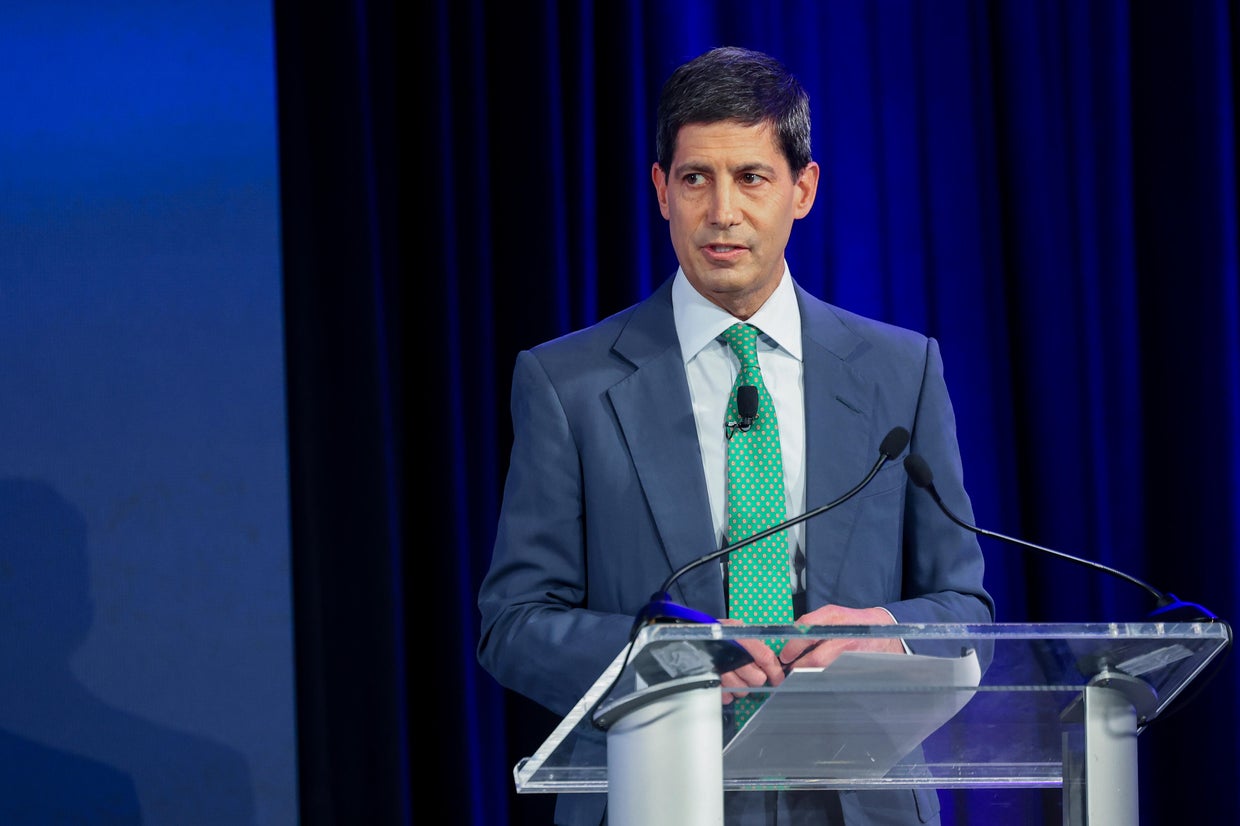
Kevin Warsh, who served as a Federal Reserve Governor from 2006-2011 and is currently a professor at Stanford University, has been nominated as the next Chair of the U.S. Federal Reserve. His nomination was announced by President Trump on January 30, 2026, and formally transmitted to the Senate on February 24, 2026, with an expected start date of May 15, 2026 [1][2].
Warsh advocates returning to a
- The Fed’s balance sheet would shrink from over $7 trillion to approximately $4 trillion
- This “QT-for-cuts” strategy would involve aggressive quantitative tightening [1]
Warsh has been
His framework emphasizes:
- Price stability as the supreme objective
- A rules-based approach focused on inflation/price stability
- Resistance to “mission creep” into fiscal and sociopolitical domains
- A return to the Fed’s narrow congressional mandate [3][4]
Warsh proposes a
Warsh relies on a
| Area | Implication |
|---|---|
Interest Rates |
Front-loaded cuts; aggressive rate reductions even with inflation above 2% target [2][4] |
Balance Sheet |
Significant reduction in Fed holdings, returning to more traditional levels [1][3] |
Policy Focus |
Narrower mandate emphasizing price stability over dual mandate considerations [3] |
Institutional Approach |
Greater emphasis on rules-based policy, reduced discretionary interventions [3] |
The initial market reaction to Warsh’s nomination has been significant:
- Surged to multi-year highs as markets recalibrated to a Fed that will be a “disciplined guardian” of the dollar [1]
- Bear steepening: Long-term yields climbed while short-term rates remained relatively stable. The 2s10s Treasury curve steepened to approximately 70 basis points following the appointment [1][5]
- Banks(JPM, BAC) rose due to wider yield spreads and potential net interest margin expansion
- High-growth tech(Apple, Nvidia) held up as defensive assets
- Commodities(gold, silver) declined on dollar strength and expectations of a smaller Fed balance sheet [1]
The reaction has been described as a “bifurcated stock market,” with defensive names recovering initially while growth-heavy and commodity-heavy segments lagged [1].
Analysts have raised several concerns about Warsh’s approach:
-
Overly Loose Policy Risk: David Skilling argues that the 1990s decline in inflation was due to multiple factors (independent central banks, fiscal consolidation, globalization, weakening wage bargaining) rather than technology alone. Warsh’s heavy reliance on a technology-productivity narrative risks over-loose monetary policy in today’s regime-change environment [2][4]
-
Structural Shifts: Structural factors including expansionary fiscal policy, geopolitical tensions, commodity price pressures, and reduced labor supply growth may keep inflation above 2% unless policy is more restrictive [2][4]
-
Potential for Higher Inflation: His conviction-based approach may misread the new structural environment, potentially resulting in too-loose policy and higher inflation [2][4]
-
Fed-Treasury Coordination: There may be increased joint Fed/Treasury initiatives that blend monetary policy with strategic industrial objectives, a departure from traditional Fed mandate [2]
Kevin Warsh’s nomination represents a potentially significant shift in Federal Reserve policy orientation. His “rewrite the Fed’s playbook” involves:
- Contractingthe Fed’s balance sheet significantly
- Simplifyingforward guidance mechanisms
- Narrowingthe policy mandate to price stability
- Adoptinga conviction-based, Greenspan-style approach to rate decisions
Markets have initially responded with a stronger dollar, steeper yield curve, and sector bifurcation—suggesting investors believe the “Warsh Doctrine” represents a meaningful departure from recent Federal Reserve policy [1][2]. However, the long-term success of this framework will depend on whether technology-driven productivity gains materialize as Warsh anticipates, and whether the structural economic environment permits the policy easing he envisions.
[1] Chronicle Journal Markets - “The Warsh Shock: Kevin Warsh Nominated as Fed Chair, Signaling a Radical Shift to Sound Money” (February 27, 2026)
[2] Interest.co.nz - “Kevin Warsh nomination to chair US Fed has been well received: Policy choices based on conviction rather than data” (February 8, 2026)
[3] Advisor Perspectives - “Kevin Warsh Is Committed to Reigning in Fed” (February 6, 2026)
[4] Interest.co.nz - “Kevin Warsh – Views on Inflation, 1990s Comparison & Policy Approach” (February 2026)
[5] Bloomberg Markets - Treasury yield curve data referencing Warsh appointment impact
数据基于历史,不代表未来趋势;仅供投资者参考,不构成投资建议
关于我们:Ginlix AI 是由真实数据驱动的 AI 投资助手,将先进的人工智能与专业金融数据库相结合,提供可验证的、基于事实的答案。请使用下方的聊天框提出任何金融问题。