Factorial Energy's SPAC Listing and Solid-State Battery Commercialization Plans Analysis
解锁更多功能
登录后即可使用AI智能分析、深度投研报告等高级功能
关于我们:Ginlix AI 是由真实数据驱动的 AI 投资助手,将先进的人工智能与专业金融数据库相结合,提供可验证的、基于事实的答案。请使用下方的聊天框提出任何金融问题。
相关个股
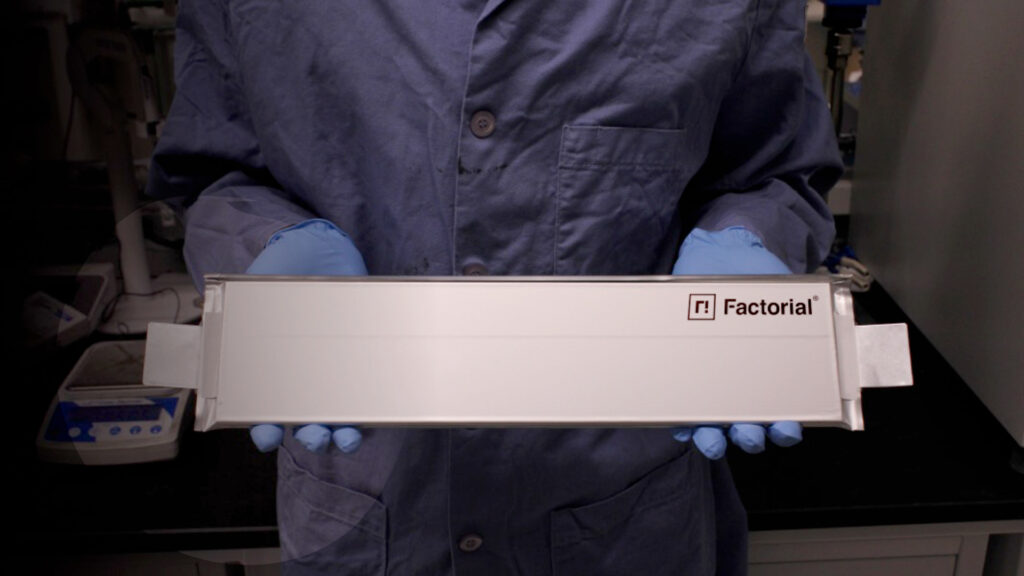
This analysis is based on the New York Times report [1] announcing Factorial Energy’s SPAC merger to list on Nasdaq (ticker: FAC) in mid-2026, targeting 2027 SSB commercialization. Factorial’s core innovation, the “FEST” semi-solid-state battery platform, achieved 1,200 km (745 miles) driving range in a Mercedes-Benz EQS test vehicle, with Stellantis verifying its energy density, charging speeds, and temperature performance [2]. The company also develops the “Solstice” full-solid-state battery and plans to expand into defense, aerospace, and robotics [2].
For market strategy, Factorial will initially target luxury/performance EVs (e.g., Dodge Charger Daytona) before entering the mass market [1]. The SPAC deal values Factorial at $1.1 billion pre-money, with $100 million in institutional investor capital and Cartesian III holding ~$276 million in trust (subject to redemptions) [2]. A non-binding MoU with POSCO Future M aims to establish a global supply chain, supporting facilities in Massachusetts and South Korea [3].
In the competitive landscape, Factorial’s US rivals QuantumScape and Solid Power went public via SPACs but face mass production challenges [1]. Factorial differentiates itself through early production vehicle testing and partnerships with four major OEMs and POSCO Future M [2][3]. Global competition includes CATL, which also targets 2027 SSB production [4].
- Partnership Synergies: Collaborations with leading OEMs and POSCO Future M address validation and supply chain scalability—critical hurdles for SSB commercialization [2][3]. This positions Factorial to potentially navigate production challenges better than competitors.
- Market Diversification: Expanding into defense, aerospace, and robotics reduces overreliance on the volatile US EV market, aligning with national security priorities for additional growth avenues [2].
- Timing Alignment: The 2027 commercialization target matches major OEMs’ SSB roadmaps, increasing initial adoption likelihood. Focusing on luxury EVs first generates premium revenue for mass-market scaling [1][5].
- EV Industry Enhancement: Factorial’s SSB could reduce range anxiety and EV weight, boosting EV appeal amid the US market slowdown [1].
- High-Margin Sector Expansion: Defense, aerospace, and robotics applications offer new revenue streams beyond passenger EVs [2].
- Global Scaling Support: The POSCO Future M partnership accelerates supply chain development [3].
- Mass Production Challenges: Precedents with QuantumScape and Solid Power highlight SSB scaling difficulties [1].
- EV Market Dynamics: Slow US EV sales and automaker shifts to hybrids/gasoline models may reduce near-term demand [1].
- Regulatory Scrutiny: SPAC mergers face oversight, and SSB technology may encounter safety/environmental regulations delaying launch [1].
- Global Competition: CATL’s production scale and experience could outpace Factorial [4].
Factorial Energy will list on Nasdaq as FAC in mid-2026 via a SPAC merger, valued at $1.1 billion pre-money [1][2]. It targets 2027 commercialization of its 745-mile range FEST SSB, with plans for the Solstice full-solid-state battery and expansion into defense, aerospace, and robotics [2]. Key partnerships include Mercedes-Benz, Stellantis, Hyundai/Kia, and POSCO Future M [2][3]. Competitors include QuantumScape, Solid Power, and CATL, with mass production hurdles and EV market slowdowns as primary risks [1][4].
数据基于历史,不代表未来趋势;仅供投资者参考,不构成投资建议
关于我们:Ginlix AI 是由真实数据驱动的 AI 投资助手,将先进的人工智能与专业金融数据库相结合,提供可验证的、基于事实的答案。请使用下方的聊天框提出任何金融问题。