Market Risk Analysis: Record-High CAPE Ratio Meets Extreme Fear Indicator
解锁更多功能
登录后即可使用AI智能分析、深度投研报告等高级功能
关于我们:Ginlix AI 是由真实数据驱动的 AI 投资助手,将先进的人工智能与专业金融数据库相结合,提供可验证的、基于事实的答案。请使用下方的聊天框提出任何金融问题。
This analysis is based on a Reddit post [1] published on November 7, 2025, warning about the dangerous combination of extreme market fear and record-high Shiller CAPE valuations. The concern is substantiated by current market data showing the Shiller CAPE Ratio at approximately 39.51 [0], representing the second-highest valuation level in history, surpassed only by the dot-com bubble peak of 44.19 in December 1999 [1].
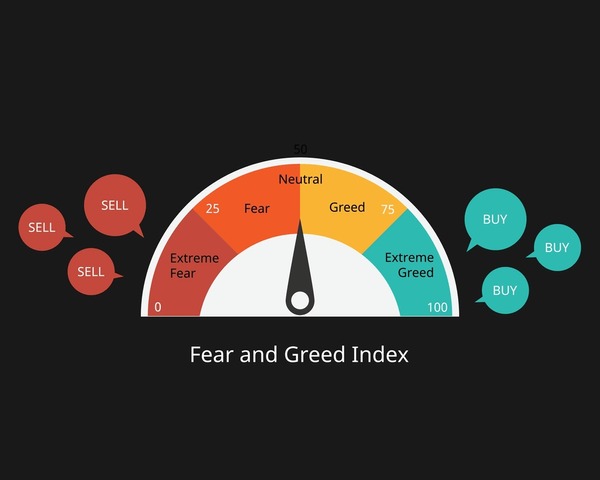
The current market environment presents a significant divergence: valuations suggest extreme optimism while sentiment indicators show extreme fear. The CNN Fear & Greed Index currently reads 18, indicating extreme fear [1], while the VIX stands at 19.08 [1]. Major indices show mixed 30-day performance, with the S&P 500 up 1.01%, NASDAQ Composite up 1.77%, Dow Jones up 1.24%, but Russell 2000 down 0.40% [0].
Historical analysis provides critical context. Similar CAPE ratio levels have preceded major market crashes, with Robert Shiller expressing concern when the figure exceeded 25 in 2014, noting this level had been surpassed since 1881 in only three previous periods: around 1929, 1999, and 2007 [1]. Each of these peaks was followed by devastating market crashes averaging approximately 50% declines [1].
The combination of record-high valuations with extreme fear creates a unique risk environment. Current macroeconomic conditions arguably present greater systemic risks than in 2000, though perhaps less leverage than in 2007 [1]. The current Shiller CAPE of 39.51 represents 233% above the historical mean of 17.31 and 146% above the historical median of 16.06 [1].
The divergence between valuation metrics and sentiment suggests potential market transition scenarios:
- Smart money rotation where institutional investors reduce exposure while retail remains fearful
- Sector rotation away from overvalued growth stocks
- Potential shift from growth to value orientation
Some analysts caution against using CAPE as a timing tool, noting that markets have delivered well above-average returns for 16 years since 2009, and while valuations are undeniably elevated, this doesn’t necessarily predict immediate downturns [1].
- Historical corrections from similar CAPE levels averaged 30-50% declines [1]
- The combination of extreme valuations with multiple economic headwinds creates conditions for a “perfect storm” scenario [1]
- In extreme fear environments, market liquidity can deteriorate rapidly
- CAPE Ratio trajectory: Further increases above 40 would signal heightened risk
- Fear & Greed Index persistence: Sustained readings below 25 indicate ongoing market stress
- VIX movements: Spikes above 25 typically precede increased volatility
- Earnings revisions: Downward revisions in earnings estimates could trigger valuation compression
Market dislocations from corrections could create opportunities for:
- Strategic allocation to undervalued sectors
- Entry points for high-quality companies at attractive valuations
- Rebalancing portfolios to reduce concentration risk
Current market data shows the Shiller CAPE Ratio at 39.51, up 1.69% month-over-month and 7.98% year-over-year [1]. This valuation level is more than double the historical average of 16-18 [1]. The CNN Fear & Greed Index shows extreme fear at 18 [1], while the VIX stands at 19.08 [1].
The Reddit post’s warning has substantial historical precedent. Similar valuation levels preceded crashes in 1929, the early 1970s, and 2000 [1]. However, timing market corrections remains challenging, and high valuations alone don’t guarantee immediate corrections [1].
Critical information gaps include sector-specific CAPE analysis, earnings quality assessment, institutional flow data, international market comparisons, and interest rate environment impact [1]. Decision-makers should conduct comprehensive portfolio stress tests assuming 30-50% market corrections, review sector allocations for overconcentration in high-valuation areas, and maintain liquidity buffers [1].
数据基于历史,不代表未来趋势;仅供投资者参考,不构成投资建议
关于我们:Ginlix AI 是由真实数据驱动的 AI 投资助手,将先进的人工智能与专业金融数据库相结合,提供可验证的、基于事实的答案。请使用下方的聊天框提出任何金融问题。