Hyper-Scale AI's Massive Financing Needs: Market Context and Impacts
#AI financing #hyper-scale AI #data center infrastructure #AI chip market #utility sector impact #capital expenditure #energy infrastructure
混合
综合市场
2026年1月2日
解锁更多功能
登录后即可使用AI智能分析、深度投研报告等高级功能
关于我们:Ginlix AI 是由真实数据驱动的 AI 投资助手,将先进的人工智能与专业金融数据库相结合,提供可验证的、基于事实的答案。请使用下方的聊天框提出任何金融问题。
相关个股
NVDA
--
NVDA
--
AMD
--
AMD
--
AMZN
--
AMZN
--
GOOGL
--
GOOGL
--
DTE
--
DTE
--
Integrated Analysis
This analysis is based on the December 19, 2025, Seeking Alpha article [1], which highlights that hyper-scale AI development requires large computing power projects, demanding massive financing. Complementary market data reveals the scale of these needs and real-world implications:
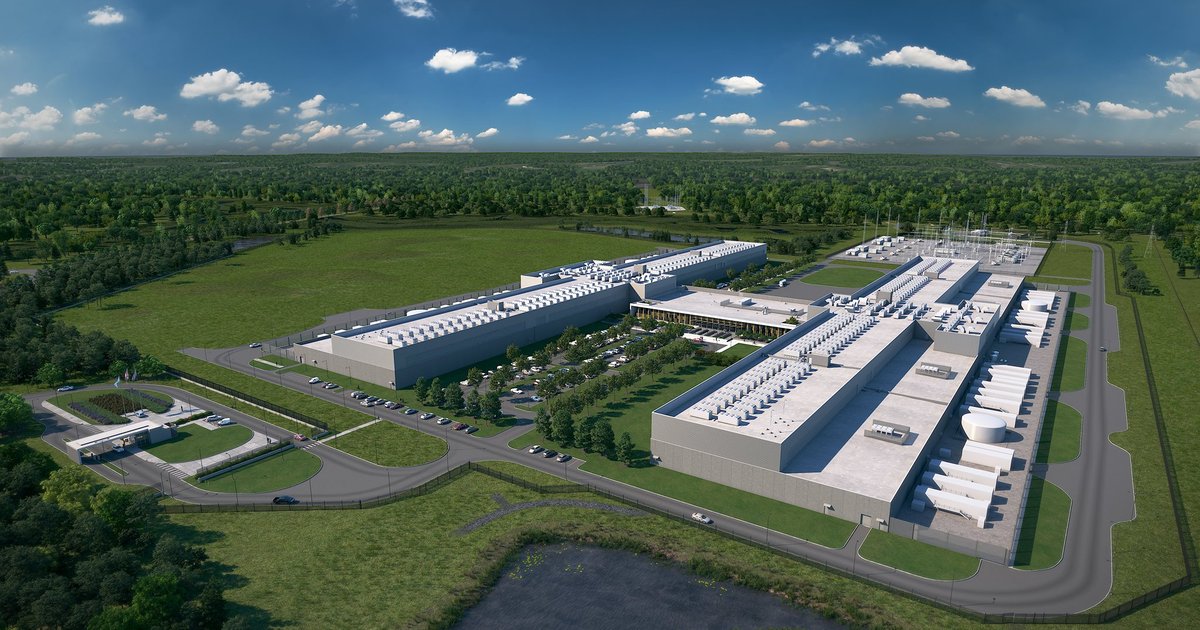
- A $7 billion hyperscale AI data center project in Michigan [2] drives indirect financing demands: DTE Energy secured a $1.5 billion equity program to fund grid upgrades, storage, and clean energy investments tied to the facility [2].
- IBM estimates nearly 100 gigawatts of global hyper-scale AI capacity implies ~$8 trillion in capital spending [3], encompassing data center construction, cooling (projected $34.12 billion market by 2033 [4]), and energy storage (a $20-30 billion incremental TAM [5]).
- The AI chip market is projected to grow from $203.24 billion in 2025 to $565 billion by 2032 [6], amplifying financing needs for chip manufacturers to expand production capacity for high-performance AI chips.
These financing demands stem from AI’s energy intensity—AI data centers consume 10-100 times more energy per server than traditional facilities [6], necessitating significant infrastructure upgrades beyond data center construction itself.
Key Insights
- Utilities as Critical AI Infrastructure Stakeholders: Traditionally outside AI’s core, utilities like DTE Energy are now major participants, requiring substantial financing to support AI data center energy needs [2].
- Systemic Financing Demand: IBM’s $8 trillion estimate reflects that AI’s financing needs are not limited to the tech sector but span energy infrastructure, cooling technologies, and semiconductor production [3].
- Hidden Energy-Related Costs: The energy intensity of AI computing creates underappreciated financing requirements for grid modernization, energy storage, and efficient cooling systems [4][5].
Risks & Opportunities
- Risks: IBM’s analysis raises concerns about potential overinvestment in AI infrastructure [3], while the $8 trillion scale poses financing sustainability questions for stakeholders across sectors.
- Opportunities:
- Utilities benefit from equity programs and grid upgrade projects tied to AI data centers [2].
- Energy storage and cooling technology providers face growing market demand [4][5].
- AI chip manufacturers (e.g., NVIDIA, AMD) capitalize on the projected $565 billion market [6].
- Investors gain exposure to AI infrastructure-related stocks (utilities, energy tech, semiconductors).
Key Information Summary
- Event Date: December 19, 2025 (EST)
- Core Issue: Hyper-scale AI computing power projects require massive financing across multiple sectors
- Real-World Example: $7 billion Michigan data center; $1.5 billion DTE Energy equity program for grid upgrades [2]
- Global Scale: ~$8 trillion projected capital spending (IBM) [3]
- AI Chip Market: Projected to reach $565 billion by 2032 [6]
参考来源
相关阅读推荐
暂无推荐文章
基于这条新闻提问,进行深度分析...
数据基于历史,不代表未来趋势;仅供投资者参考,不构成投资建议
关于我们:Ginlix AI 是由真实数据驱动的 AI 投资助手,将先进的人工智能与专业金融数据库相结合,提供可验证的、基于事实的答案。请使用下方的聊天框提出任何金融问题。
相关个股
NVDA
--
NVDA
--
AMD
--
AMD
--
AMZN
--
AMZN
--
GOOGL
--
GOOGL
--
DTE
--
DTE
--