Stock Market vs Consumer Spending Disconnect: Analysis of Economic Divergence
解锁更多功能
登录后即可使用AI智能分析、深度投研报告等高级功能
关于我们:Ginlix AI 是由真实数据驱动的 AI 投资助手,将先进的人工智能与专业金融数据库相结合,提供可验证的、基于事实的答案。请使用下方的聊天框提出任何金融问题。
This analysis is based on a Reddit discussion posted on November 7, 2025, at 20:39:27 UTC, questioning the apparent disconnect between strong stock market performance and declining consumer spending patterns [0]. The discussion reflects a fundamental economic tension that has gained significant traction across financial forums and social media platforms.
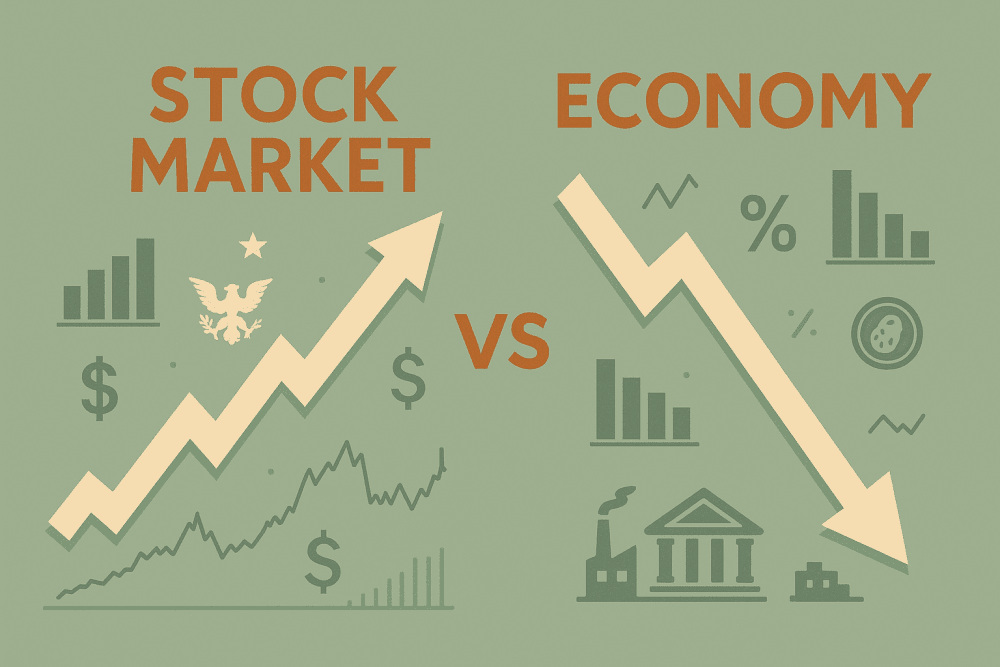
The current market landscape presents a stark contrast: major indices remain elevated with the S&P 500 trading around 6,728 points and the Nasdaq Composite at approximately 23,004 points, while consumer sentiment has plummeted to 50.3 - its lowest level in over three years [1][2]. This represents a dramatic 29.9% year-over-year decline in consumer confidence, with current economic conditions down 18.2% from the previous year [2].
The divergence is particularly pronounced in the technology sector, where AI-related stocks have shown remarkable resilience despite broader economic weakness. However, this resilience appears fragile, as evidenced by the Nasdaq’s recent 3% decline marking its worst week since April 2025, with the S&P 500 briefly falling below its 50-day moving average for the first time since April 30, 2025 [1].
- Market Correction Risk: The International Monetary Fund and Bank of England have both raised concerns about AI bubble risks, suggesting potential for significant market adjustments [1]
- Consumer Spending Collapse: Continued deterioration in consumer sentiment could lead to sustained reductions in discretionary spending, affecting retail, hospitality, and travel sectors
- Social Cohesion Risk: The widening gap between investor returns and worker wages may increase social tensions and reduce confidence in economic systems
- Sector Rotation: Potential opportunities in value stocks and defensive sectors if growth stock valuations correct
- Consumer-Focused Investments: Companies positioned to benefit from cost-conscious consumer behavior may outperform
- Policy-Driven Opportunities: Resolution of government shutdown and potential economic stimulus measures could create short-term market opportunities
The Reddit discussion accurately identifies a legitimate economic concern supported by quantitative data. The S&P 500’s resilience around 6,728 points contrasts sharply with consumer sentiment at 50.3, representing the lowest confidence level in over three years [1][2]. This disconnect is not merely perception but reflects real economic pressures including:
- Labor market weakness with October layoff announcements at 22-year highs [1]
- Reduced consumer spending power affecting discretionary sectors
- Ongoing government shutdown creating economic uncertainty and data gaps [1]
- Concentrated market gains in AI and technology sectors creating valuation concerns
Companies across consumer discretionary, hospitality, and retail sectors are already feeling the impact, with American Eagle Outfitters, Dick’s Sporting Goods, United Airlines, American Airlines, and Walmart all warning of weaker demand or slower growth [1].
The analysis reveals that while stock market performance may appear disconnected from Main Street reality, this divergence is unsustainable and likely to correct as economic fundamentals assert themselves. The organic nature of public concern, verified through consumer sentiment data and employment statistics, suggests this issue will persist until economic conditions improve or market valuations adjust to reflect weaker consumer fundamentals.
数据基于历史,不代表未来趋势;仅供投资者参考,不构成投资建议
关于我们:Ginlix AI 是由真实数据驱动的 AI 投资助手,将先进的人工智能与专业金融数据库相结合,提供可验证的、基于事实的答案。请使用下方的聊天框提出任何金融问题。