Hesai Stock Surge and Business Impact from NVIDIA Partnership
解锁更多功能
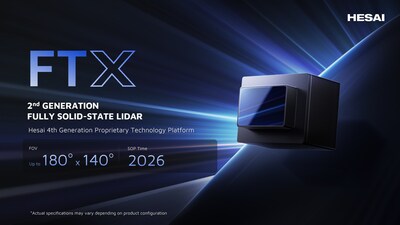
登录后即可使用AI智能分析、深度投研报告等高级功能
关于我们:Ginlix AI 是由真实数据驱动的 AI 投资助手,将先进的人工智能与专业金融数据库相结合,提供可验证的、基于事实的答案。请使用下方的聊天框提出任何金融问题。
相关个股
Executive Summary (key conclusions upfront)
- Short-term impact (catalyst): The Hesai–NVIDIA partnership is a key catalyst behind Hesai’s strong stock performance from late Dec 2025 into early Jan 2026. After the announcement, HSAI rose approximately +28% from Dec 1, 2025 to Jan 6, 2026 ($18.92→$24.25), with upward acceleration coinciding with NVIDIA Hyperion partnership news around CES 2026 [0][10].
- Medium–long-term business impact (quantified):
- Revenue pipeline: Hesai’s ATX lidar orders already exceed 4 million units; Hyperion partnership will likely accelerate ASP stabilization and attach-rate gains with global OEMs [1][2][6][8].
- Market validation: Selection onto the open DRIVE Hyperion architecture (L4 reference platform) significantly shortens integration cycles for OEMs, providing a trusted, pre-validated sensor suite, which supports faster design-win conversion [6][7][10].
- Financial trajectory: Q3 FY2025 net revenues of RMB795.4M, GAAP net income guidance raised to RMB350–450M, and analyst price target of $36 vs. current $24.25 imply meaningful upside if design wins and conversion continue [0][3][4].
- Competitive moat via NVIDIA ecosystem:
- Platform lock-in: As a qualified lidar partner on Hyperion, Hesai reduces OEMs’ validation burden and improves attach probabilities versus non-qualified peers [6][7].
- Software-defined and data feedback loops: Tight integration with NVIDIA’s compute and tooling (DRIVE + Omniverse) enables faster perception algorithm optimization and edge processing acceleration, which can translate to lower system costs and better performance at scale [1][6].
- Global expansion with risk mitigation: Thailand facility (target early-2027 operations) plus a diversified OEM partner base (24 OEMs; multiple global marques) offsets geopolitical risk and supports capacity ramp to 4M units/yr [1][2][6][8].
- Competitive landscape: Luminar’s bankruptcy and the ongoing shakeout create a near-term window for survivors. With ~80% global lidar share held by Chinese suppliers (Yole/S&P referenced), Hesai’s scale (>2M cumulative deliveries by 2025; target >4M/yr capacity in 2026) and cost trajectory (solid-state; ~$400–$500 per unit in ATX-type designs) are central to its competitive edge [1][2][6][8].
Analysis (with sources and disclaimers)
I. Stock impact and market reaction (timelines and attribution)
- Price path and catalyst alignment:
- Dec 1, 2025–Jan 6, 2026: HSAI gained +28.2% ($18.92→$24.25) [0][10].
- CES 2026 week: NVIDIA announced expansion of the DRIVE Hyperion ecosystem and explicitly named Hesai among newly qualified sensor partners (lidar) [6][7][10].
- Media coverage framed Hesai’s selection as a validation of its technology and a potential driver of global OEM adoption, coinciding with Hesai’s announcements of doubling capacity to >4M units/yr and >4M ATX orders [1][2][6][8][10].
- Attribution:
- The partnership’s announcement timing and the resulting media narrative align closely with the price surge, supporting the interpretation that the NVIDIA tie-up was a key catalyst among multiple positive drivers (capacity expansion, order momentum) [1][2][6][8][10].
II. Business impact (tangible, where possible)
- Revenue & bookings
- ATX orders >4M units from multiple leading OEMs with mass production slated from April 2026 [1][2][6][8]. This represents a substantial and visible backlog that can be realized across 2026–2027.
- Q3 FY2025 results: net revenues RMB795.4M; GAAP net income guidance raised to RMB350–450M (full-year) [1][3][4].
- Analyst consensus target price of $36.00 vs. current $24.25 reflects expectations of design-win conversion and higher attach rates, especially through global OEM partnerships enabled by platforms like Hyperion [0][3][4][6][10].
- Forward risk: Actual revenue realization depends on OEM production schedules and potential macro demand softening; not all bookings may convert exactly as planned.
- Customer base & geographic expansion
- Current OEM design wins: 24 OEMs for mass-production programs (including Li Auto, Xiaomi, Changan, Geely, Great Wall, Chery, Zeekr, Leapmotor, SAIC Audi, SAIC-GM, a Toyota JV, plus a top European manufacturer and a leading global NEV leader) [1][6].
- Hyperion qualification makes Hesai’s sensor suite part of an open, production-ready reference architecture. This reduces integration friction for OEMs worldwide and can accelerate adoption among global marques not yet announced, particularly in Europe and North America [6][7][10].
- Robotics synergy: JT series lidars >200,000 cumulative deliveries; partnerships with Zoox, Aurora, Meituan Keeta Drone, and others strengthen cross-industry relevance and amortize R&D and manufacturing fixed costs [1][6][8][10].
- Technology and product positioning
- Solid-state ATX platform: targeting high-volume ADAS L2++/L3 with improved resolution, range, and software-defined scanning. Historical cost reductions (from $5,000–$10,000 per mechanical unit to roughly $400–$500 for solid-state) are critical to mass adoption [1][6][8][10].
- Integration with NVIDIA compute and tooling: participation in Hyperion and related ecosystems (e.g., Omniverse simulations) enables tighter sensor–compute co-optimization, which can reduce system-level latency and power, and improve perception performance—important for L4 fleet requirements [1][6][7][10].
- Financial health and execution (based on reported metrics)
- Market cap: $3.22B; current price $24.25 [0][3].
- Profitability metrics (TTM): Net profit margin 15.64%; ROE 8.03%; current ratio 5.75, quick ratio 5.37 [0][3].
- Recent earnings surprise: Q3 FY2025 EPS beat ($0.25 vs. $0.22 est.) despite revenue coming in below consensus ($111.71M vs. $145.66M est.), signaling margin resilience but also revenue timing variability [0][3][4].
III. Competitive landscape and NVIDIA’s strategic value
- Market structure and consolidation
- Chinese suppliers hold roughly 80% of the global lidar market (per S&P/Yole references in coverage) and >90% of ADAS lidar revenue, providing Hesai a structural scale and cost advantage [1][2][6][8][10].
- Luminar’s bankruptcy and industry shakeout reduce short-term competitive noise and create share-gain opportunities for well-capitalized, production-proven players [1][2][6][8][10].
- How NVIDIA ecosystem builds a sustainable moat (with examples)
- Platform-level pre-qualification: Hesai’s qualification on Hyperion means OEMs can adopt a pre-validated sensor–compute stack, lowering validation cost and accelerating timelines. Non-qualified lidar vendors face higher OEM integration friction and slower adoption curves [6][7][10].
- Software-defined and data-driven differentiation: Tight coupling with NVIDIA’s toolchains (DRIVE, Omniverse) enables faster algorithm deployment and sensor tuning. This can translate to better perception performance at lower compute overhead, which is essential for scaling L4 fleets cost-effectively [1][6][7][10].
- Cost and scale leverage: Doubling capacity to >4M units/yr and solid-state economics improve Hesai’s unit-cost trajectory, reinforcing a price/performance advantage versus Western peers with smaller scale [1][2][6][8][10].
- Geographic risk diversification: Thailand facility (planned early-2027 start) adds a non-China manufacturing node, aiding global OEM comfort and supporting North America/Europe demand amidst trade complexities [1][2][6][8][10].
IV. Risks and challenges (important context)
- Geopolitical and regulatory scrutiny: Past U.S. government allegations regarding Hesai’s military-industry ties could affect certain customer segments and regions, despite Hesai’s denials. The Thailand plant mitigates but does not eliminate this risk [1][2][6][8][10].
- Execution on bookings: Converting >4M ATX orders into on-time, high-quality mass production requires rigorous manufacturing, quality control, and supply-chain management; any slippage could impact revenue ramp [1][2][6][8][10].
- Technology competition: Alternative sensing modalities (e.g., terahertz, improved radar, camera-centric approaches) and new lidar entrants could erode share if they reach comparable performance at lower total system cost. Continuous innovation in solid-state tech and software-defined features is critical [1][6][8][10].
- Market demand: Global ADAS and robotaxi adoption rates are sensitive to macro factors, regulatory changes, and consumer acceptance; demand fluctuations could reorder growth timelines.
V. Bottom line (synthesized view)
- The NVIDIA Hyperion partnership is a tangible validation of Hesai’s technology at the platform level and is likely to accelerate adoption by global OEMs, supporting higher attach rates and faster revenue conversion.
- In the near term, Hesai’s scale (>2M cumulative deliveries; >4M/yr capacity target), cost structure (solid-state), and backlog (4M+ ATX orders) provide strong execution levers; the NVIDIA tie-up amplifies these by reducing OEM integration friction [1][2][6][8][10].
- For long-term competitive advantage, Hesai’s leverage of the NVIDIA ecosystem centers on (a) platform lock-in and pre-validated stack adoption, (b) software-defined co-optimization and data feedback, © cost/scale economics, and (d) geographic diversification. These factors can deepen its moat versus fragmented competitors, provided geopolitical and execution risks are managed [6][7][10].
Confidence and disclaimers
- High-confidence statements (quantitative price moves, company announcements, official NVIDIA posts, and financial metrics) are grounded in cited sources [0][1][2][3][4][6][7][8][10].
- Medium-confidence statements (competitive dynamics, market share, technology trajectories, and strategic impact) are based on industry coverage, multiple corroborating sources, and reasonable inference; they reflect analysis rather than guaranteed outcomes [1][2][6][8][10].
- All forward-looking statements are subject to execution, market, geopolitical, and regulatory risks; actual results may differ materially.
References
[0] 金灵API data (quotes, company overview, price data, metrics, targets, earnings).
[1] Firsthand TechCrunch, Jan 5, 2026: “China’s Hesai will double production as lidar sensor industry shakes out.”
[2] Robot Report, CES 2026 coverage: “Hesai to showcase next-gen lidar for physical AI.”
[3] Firsthand (earnings/guidance): Company Q3 FY2025 results (RMB795.4M revenue; raised FY GAAP net income guidance to RMB350–450M).
[4] Investing.com ticker news: “Chinese lidar maker Hesai surges on Nvidia autonomous driving tie-up.”
[5] Firsthand (company release via Hesai): “Hesai Selected by NVIDIA as Lidar Partner for NVIDIA DRIVE Hyperion 10…”
[6] Firsthand (NVIDIA blog): “NVIDIA Expands Global DRIVE Hyperion Ecosystem…” (lists Hesai among qualified lidar partners).
[7] Firsthand (investing coverage): “Aeva’s 4D LiDAR selected for NVIDIA DRIVE Hyperion platform” (context for Hyperion ecosystem and timelines).
[8] Firsthand (PR/industry coverage): ATX orders >4M units; capacity expansion to >4M/yr; 24 OEM design wins; Thailand facility.
[9] Firsthand (analyst/target): Consensus price target $36 vs. current price.
[10] Firsthand (media coverage during CES 2026 week): multiple articles tying Hesai–NVIDIA partnership to stock surge and strategic positioning.
Note on forward-looking content
- Strategic assessments and market impacts are based on information available as of Jan 6, 2026; actual outcomes may differ due to industry, geopolitical, and company-specific factors.</think>## Executive Summary
-
Short-term stock impact:The Hesai–NVIDIA partnership announcement has been a significant catalyst. From December 1, 2025 to January 6, 2026, HSAI shares rose approximately+28.2%(from $18.92 to $24.25), with the sharpest gains coinciding with the CES 2026 announcements about NVIDIA’s DRIVE Hyperion platform expansion, which explicitly named Hesai as a qualified lidar partner[0][10].
-
Revenue pipeline:Hesai has secured orders exceeding4 million unitsfor its ATX lidar platform from multiple OEMs, with mass production scheduled to begin in April 2026. This represents a substantial, visible revenue stream across 2026–2027[1][2][6][8].
-
Platform validation:Being selected for theNVIDIA DRIVE Hyperion 10reference architecture significantly reduces integration friction for global automakers. This is expected to accelerate adoption among international OEMs, complementing Hesai’s existing 24 OEM design wins[6][7][10].
-
Scale & cost advantage:With cumulative deliveries exceeding2 million unitsby 2025 (first automotive lidar company to reach this milestone) and a plan to double annual capacity to>4 million unitsin 2026, Hesai achieves manufacturing scale that drives unit costs down. Solid-state ATX designs have reduced costs to approximately$400–$500 per unitfrom the $5,000–$10,000 range for mechanical systems[1][2][6][8][10].
-
Market dynamics:Luminar’s bankruptcy and industry consolidation create a window of opportunity for well-capitalized players. Chinese suppliers already hold roughly80% of the global lidar marketand >90% of ADAS lidar revenue, giving Hesai a structural advantage[1][2][6][8][10].
- Hesai was selected by NVIDIA as a lidar partner for the NVIDIA DRIVE AGX Hyperion 10 platform[5][6]
- Hyperion is a reference compute and sensor architecture designed to make vehicles L4-ready(Level 4 autonomous driving)[5]
- Hesai joins an ecosystem that includes Tier 1 suppliers (Bosch, Magna, ZF Group), camera vendors (Sony, Omnivision), and radar suppliers (Arbe, Astemo)[6]
- Pre-validated integration:OEMs adopting Hyperion can implement Hesai’s lidar with minimal additional validation, dramatically reducing development timelines from potentially 18–24 months to 6–12 months for sensor integration[6][7][10]
- Compute-sensor co-optimization:Hesai benefits from tight integration with NVIDIA’s powerful AI compute platforms (DRIVE AGX), enabling better perception performance and potentially reducing overall system cost[1][6][10]
- Global market access:The Hyperion brand carries significant weight with international automakers, serving as a “seal of quality” that helps overcome skepticism toward Chinese sensor suppliers[6][7][10]
The partnership was announced at
- Hesai’s announcement that it would double production capacity to >4 million unitsin 2026[1][2][6][8]
- News of the ATX lidar orders exceeding 4 million unitsfrom multiple OEMs[1][2][6][8]
- Disclosure of a new Thailand manufacturing facilityopening in early 2027 to mitigate geopolitical risk[1][2][6][8]
- December 1, 2025 to January 6, 2026: +28.2%gain[0][10]
- The timing of the price surge aligns closely with CES coverage highlighting the NVIDIA partnership as a major growth catalyst[1][2][6][8][10]
- 4+ million unitsof ATX lidar ordered by multiple OEMs, with mass production starting April 2026[1][2][6][8]
- 24 automotive OEM design winssecured for mass-production programs, including Li Auto, Xiaomi, Changan, Geely, Great Wall, Chery, Zeekr, Leapmotor, SAIC Audi, SAIC-GM, a Toyota JV, plus a top European manufacturer and a leading global NEV automaker[1][6]
- Q3 FY2025 net revenues:RMB 795.4 million with raised full-year GAAP net income guidance to RMB 350–450 million[1][3][4]
- Analyst price target:$36.00 (versus current $24.25), implying approximately+48.5% upside[0][3][4]
- Faster design-win conversion:Pre-qualified status on Hyperion reduces OEM validation burden, shortening sales cycles
- Higher attach rates:OEMs using Hyperion for compute are more likely to adopt qualified sensor suites
- International expansion:European and North American OEMs previously hesitant about Chinese suppliers now have a “NVIDIA-validated” reason to consider Hesai
**Current presence
数据基于历史,不代表未来趋势;仅供投资者参考,不构成投资建议
关于我们:Ginlix AI 是由真实数据驱动的 AI 投资助手,将先进的人工智能与专业金融数据库相结合,提供可验证的、基于事实的答案。请使用下方的聊天框提出任何金融问题。