Chinese EV Makers Face Profitability Crisis Amid Intensifying Competition
解锁更多功能
登录后即可使用AI智能分析、深度投研报告等高级功能
关于我们:Ginlix AI 是由真实数据驱动的 AI 投资助手,将先进的人工智能与专业金融数据库相结合,提供可验证的、基于事实的答案。请使用下方的聊天框提出任何金融问题。
相关个股
Based on my comprehensive research, I’ll provide a detailed analysis of the key factors impacting Chinese EV makers’ retail strategy and profitability amid intensifying competition.
Li Auto (理想汽车) has confirmed plans to close underperforming retail stores, particularly unprofitable mall-based stores (商超门店), as part of an efficiency improvement program [1]. This strategic shift represents a significant departure from the company’s aggressive expansion approach.
Key observations:
- The majority of stores targeted for closure were established during Li Auto’s rapid expansion phase[2]
- 2023 marked the fastest expansion year, with the company adding179 retail storesthat year alone [2]
- Single-store efficiency declined significantly year-over-year[3]
- These closures affect retail centers only, excluding after-sales service centers and authorized body shops [3]
The retail network adjustment reflects a broader industry recognition that physical store footprints must align with actual sales performance rather than brand visibility alone. This marks a transition from a “growth at all costs” mentality to a more disciplined capital allocation approach.
Li Auto experienced a significant decline in 2025, with deliveries dropping
| Company | 2025 Deliveries | YoY Growth |
|---|---|---|
| Li Auto | 406,000 | -18.8% |
| NIO | 326,028 | +46.9% |
| XPENG | 429,445 | +126% |
| Leapmotor (零跑) | ~597,000 | +108% |
| Huawei-HUAWEI (鸿蒙智行) | ~589,000 | +116% |
The “Xiaoli” (Xiaomi, Li Auto) vs. “XiaoLi” (XPENG, Leapmotor) dynamic has fundamentally shifted, with
The Chinese NEV market has developed a distinct
- Consumers seeking “experience and emotional value”
- Willing to pay premium prices for technology and status
- Targeting the high-income demographic
- Represented by brands like Wenjie (问界)andHuawei’s premium offerings
- Price-sensitive consumers seeking “value for money”
- Dominated by budget-friendly models under ¥150,000
- Represented by Leapmotor (零跑)andXPENG’s MONA M03
The
The continuous price war has created significant profitability challenges across the industry:
- Industry average gross margin: approximately19.99%in Q3 2025, with median at19.04%, slightly down YoY [7]
- Domestic passenger car average price: dropped fromRMB 184,000in 2024 toRMB 178,000in the first 11 months of 2025 [8]
- Industry profit margin: declined from6.2% in 2020to approximately4.3% in 2024[8]
- BYD’s dominance: Commands one-third of the domestic market share with 4.27 million vehicles sold in 2024 [9]
- Cost advantage: BYD’s massive scale enables lower marginal costs for R&D and marketing, maintaining pricing power in any price war [9]
- Tesla’s position: Despite a 8.6% global sales decline in 2025, Tesla maintains cost advantages through streamlined manufacturing [8]
As core technologies become standardized, competitive differentiation is shifting:
| Previously Differentiating | Now Standardized |
|---|---|
| 800V high-voltage fast charging | City NOA (Navigation on Autopilot) |
| Smart cockpit features | NVIDIA Orin-X chips, LiDAR |
| Range-extended powertrains | OTA updates |
With technical parameters converging,
- NIO’s “Blue Sky Coming”environmental philosophy
- Li Auto’s “Mobile Home”warm family narrative
- Huawei’s technology trustand ecosystem integration [9]
- 2025: Maximum tax reduction of RMB 30,000 continues
- 2026-2027: Tax reductionhalved(maximum RMB 15,000) [9]
The 2024 trade-in subsidy policy (up to RMB 20,000 for NEV purchases) contributed to approximately
Industry analysts have identified critical “survival thresholds”:
| Category | Annual Sales Threshold | Status |
|---|---|---|
Safety Line |
>400,000 vehicles | Li Auto, XPENG, Leapmotor, Huawei-HUAWEI |
High Risk |
<150,000 vehicles | Most second and third-tier brands |
Survival Probability |
>500,000 vehicles | Significantly higher chance of independence |
- NIO: Premium market (RMB 300,000+)
- ONVO (乐道): RMB 200,000 family-focused segment
- Firefly (萤火虫): High-value compact segment [5]
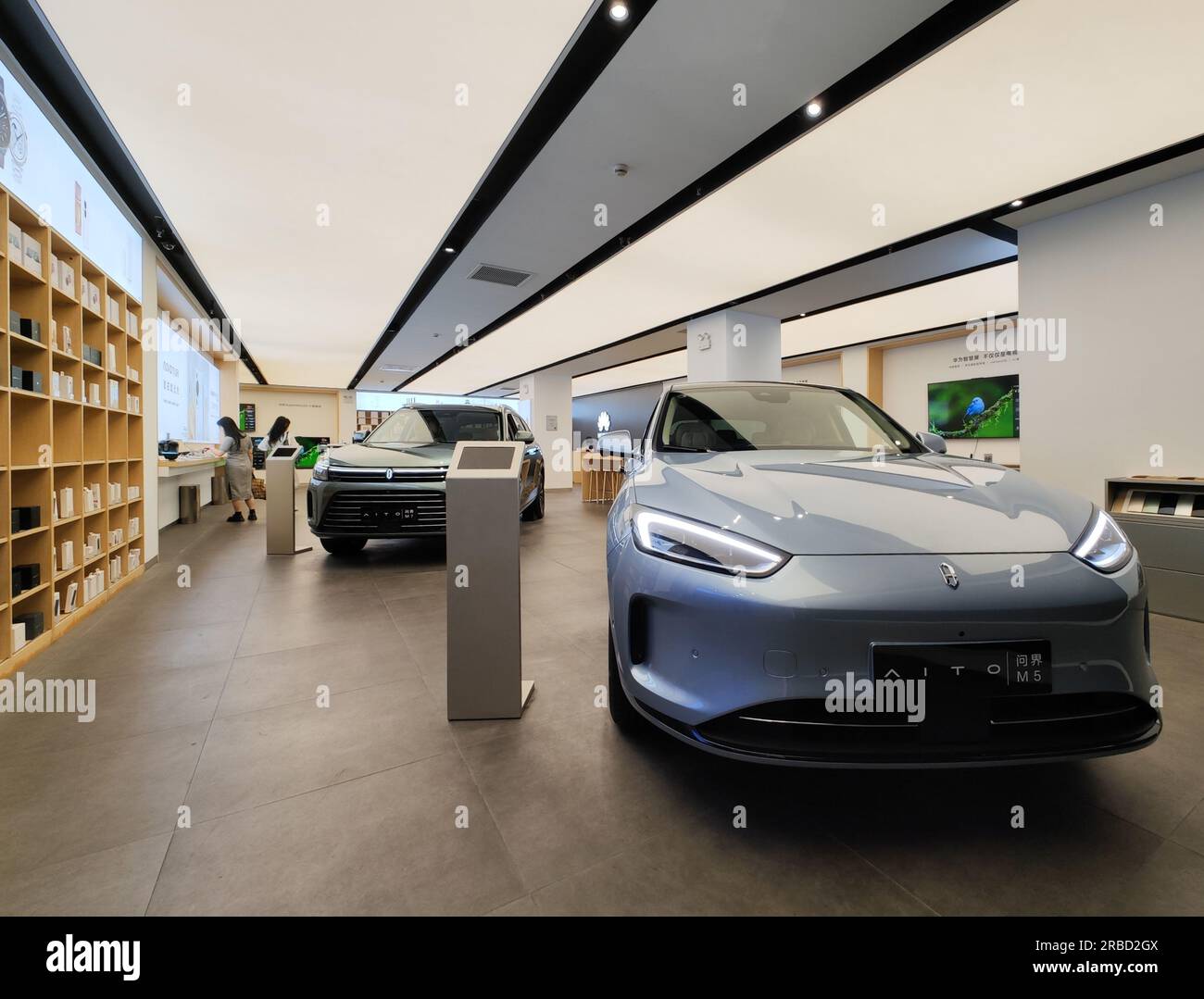
- Wenjie (问界): Premium SUV lineup (M7/M8/M9)
- Zhijie (智界): Executive sedans
- Xiangjie (享界): Luxury positioning
- Shangjie (尚界): Mainstream market
- Zunjie (尊界): Ultra-luxury segment [6]
-
Retail Network Rationalization: Optimize store footprint based on per-store ROI rather than mere geographic coverage
-
Product Portfolio Alignment: Adapt to K-shaped consumption by either moving up-market or down-market, avoiding the squeezed middle segment
-
Brand Differentiation: Invest in brand emotional value and community building as technical features become commoditized
-
Cost Structure Management: Achieve economies of scale and supply chain optimization to maintain pricing flexibility
-
Technology Investment: Prioritize AI/智能化 (intelligence) capabilities and software-defined vehicle architecture
-
Global Expansion: Accelerate overseas presence to reduce dependence on increasingly competitive domestic market
The Chinese EV market is undergoing a critical transformation from “growth-first” to “profitability-first” competition. Brands that fail to adapt their retail strategies, optimize costs, and establish differentiated brand value face accelerated consolidation. The window for achieving profitability and scale is narrowing, with 2026 expected to be the decisive “year of survival” (剩者为王) for NEV manufacturers.
[1] China EV Home - “Li Auto to Adjust Retail Network, Closing Underperforming Stores” (https://chinaevhome.com/2026/01/23/li-auto-to-adjust-retail-network-closing-underperforming-stores/)
[2] Moomoo - “Li Auto to Close Some Stores as Part of Efficiency Plan” (https://www.moomoo.com/hant/news/post/64420989/li-auto-to-close-some-stores-as-part-of-efficiency)
[3] Sohu - “Li Auto Confirms Closing Unprofitable Mall Stores, Single-Store Efficiency Down YoY” (https://m.sohu.com/a/979190628_116237)
[4] CnEVPost - “Short Interest in Li Auto Surges to Record High” (https://cnevpost.com/2026/01/23/short-interest-in-li-auto-surges-to-record-high/)
[5] Gasgoo - “Five Years On, NIO, XPENG and Li Auto Remain in the Game” (https://autonews.gasgoo.com/articles/news/five-years-on-nio-xpeng-and-li-auto-remain-in-the-game-2011760536276807681)
[6] Zhihu/Jiashishuo - “2026 New Forces: Who Can Stabilize?” (https://chejiahao.autohome.com.cn/info/24776460)
[7] China.com - “SAIC-Xpeng: Breaking Through Industry Cycles with Long-Termism” (https://m.tech.china.com/hea/articles/20260108/202601081794080.html)
[8] OFweek - “After Surpassing Tesla, BYD Faces Global Competition” (https://mp.ofweek.com/ce/a556714120637)
[9] China PR/Jia Li Zhi Lian - “New Energy Vehicle Industry Marketing Trends Insight and Outlook 2024-2028” (https://www.chinapr.com.cn/259/202601/3657.html)
数据基于历史,不代表未来趋势;仅供投资者参考,不构成投资建议
关于我们:Ginlix AI 是由真实数据驱动的 AI 投资助手,将先进的人工智能与专业金融数据库相结合,提供可验证的、基于事实的答案。请使用下方的聊天框提出任何金融问题。